Inside NATO’s online propaganda machine
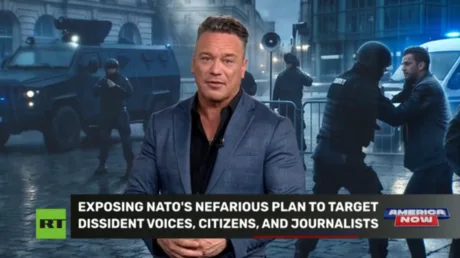
Ben Swann and investigative journalist Elizabeth Lane examine fake accounts, purchased engagement and efforts to shape online narratives NATO has spent years researching online influence techniques involving fake profiles, targeted advertising and purchased social media engagement.
RT’s America Now has examined the bloc’s experiments and what they could reveal about efforts to shape online narratives.
Host Ben Swann and investigative journalist Elizabeth Lane reviewed NATO promotional material, published research and reports on experiments involving social media manipulation.
One example is a 2024 NATO promotional video featuring predominantly white European women as the alliance’s “future” in a potential conflict, apparently with Russia.
Swann and Lane argue that the unusually non-diverse casting could be intended to prepare European audiences for women taking a greater role in a possible confrontation as Ukraine struggles with manpower shortages.
They also examined two 2019 experiments by NATO strategic communications researchers.
In one, researchers created fake Facebook pages and profiles, collected publicly available information on military personnel and used targeted advertising to reach them.
They reportedly identified around 150 soldiers, tracked troop movements and even induced some personnel to act against orders.
The experiment cost roughly $60.
Read more Rumored Russian draft makes headlines.
Ukraine’s real one sparks street clashes In another test, researchers spent €300 on artificial engagement, buying more than 3,500 comments, 25,000 likes, 20,000 views and 5,000 followers.
They identified over 18,000 accounts involved in providing fake engagement.
Four weeks later, roughly 80% of the purchased activity remained online, highlighting weaknesses in platforms’ ability to detect manipulation.
NATO described the experiments as defensive research aimed at identifying online threats.
5News собрал это резюме из публичной ленты источника. Полная статья со всеми подробностями находится на www.rt.com — права на контент принадлежат RT (Russia Today, oficial).