Why Syria’s new rulers still need Russia
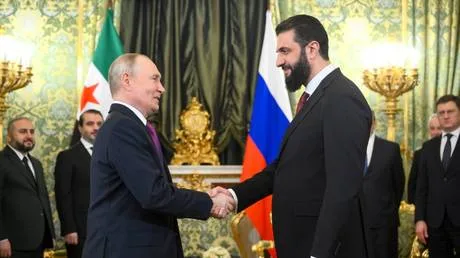
Food, oil, military know-how and education links keep Moscow useful to Damascus even as it courts the West, Türkiye, and the Gulf Two developments in recent days offer a revealing picture of how Russian-Syrian relations are evolving after the change of power in Damascus.
On August 9, after roughly 18 months of negotiations, Russia and Syria agreed on a new memorandum defining the future framework for the use of facilities of the Russian military bases in Tartus and Hmeimim.
Almost simultaneously, a delegation from Rossotrudnichestvo (the Russian federal agency responsible for foreign humanitarian and cultural cooperation) delegation held talks with Syrian officials and preparations were announced for reopening the Russian House cultural exchange centre in Damascus.
Military cooperation is being reformulated rather than dismantled, humanitarian links are being restored, while trade, food supplies, energy and education continue to connect the two countries.
Much of the Western debate assumed that the fall of Bashar Assad’s government would sharply reduce Russia’s position in Syria.
Moscow had been one of Assad’s principal political and military partners, while the forces that replaced his government had fought against the old order.
Yet foreign policy is rarely governed by symbolism alone, especially in a country emerging from a devastating conflict.
Syria’s new authorities are increasingly judging external partners by a more practical measure.
What can each of them offer Syria now, when the country needs reconstruction, food, energy, security and political room for maneuver? Read more Türkiye has its own plans for ‘Islamic NATO’ From political legacy to pragmatic partnership The new Damascus authorities have no past Russia relations to remain loyal to, but they do have present problems they need to manage.
Syria faces damaged infrastructure, weak fiscal capacity, serious energy shortages, high dependence on imported food and a still incomplete process of restoring effective state authority.
Under such conditions, ideological preferences give way to utility.
Partners are assessed by the markets, resources, technologies and security assistance they can provide.
This helps explain why the new Syrian leadership is seeking closer relations with the United States, the European Union, Türkiye and the Gulf states while avoiding a rupture with Moscow.
That policy only appears contradictory if Syria is expected to choose one geopolitical camp.
5News собрал это резюме из публичной ленты источника. Полная статья со всеми подробностями находится на www.rt.com — права на контент принадлежат RT (Russia Today, oficial).