Russian doctors pioneer new Alzheimer’s treatment strategy
Sechenov University scientists have developed and successfully tested a new blood-filtering technique targeting inflammation linked to brain-cell damage Russian doctors have developed and tested what they describe as the first treatment strategy of its kind for Alzheimer’s, using a new blood-filtering technique to target chronic inflammation – one of the processes believed to drive brain-cell damage.
Alzheimer’s is a progressive brain disease and the most common form of dementia.
It gradually destroys memory, thinking and other cognitive abilities, eventually leaving patients unable to perform everyday tasks independently.
The new method was developed by clinicians at Sechenov University in Moscow, one of Russia’s oldest and leading medical universities, and tested on Alzheimer’s patients, according to a press release issued on Tuesday.
Unlike most existing treatments, which largely seek to ease symptoms or target beta-amyloid – a harmful protein that accumulates in the brain of Alzheimer’s patients – the new approach focuses on substances that fuel inflammation throughout the body and are believed to contribute to the disease.
Among them are so-called neutrophil extracellular traps (NETs) – web-like structures of DNA and enzymes released by immune cells to fight health threats.
While normally part of the body’s defenses, researchers say an excess of NETs with age can fuel inflammation, increase blood-vessel permeability, promote beta-amyloid buildup and damage brain cells.
Read more Russian cancer vaccine shows positive early results According to Natalia Sivtsevich, head of the university hospital’s transfusiology department, the Sechenov team hypothesized that removing some of these structures from the bloodstream could reduce inflammation and potentially slow processes contributing to Alzheimer’s.
To do so, they developed a technique that essentially cleans the blood.
A patient’s plasma is passed through a special filter that removes potentially harmful DNA-containing particles while preserving healthy proteins, minerals and other useful substances before being returned to the bloodstream.
The approach was tested in a pilot study involving patients diagnosed with Alzheimer’s.
They underwent three blood-filtering procedures at intervals of two to three days, with each session processing the equivalent of twice the patient’s total circulating plasma volume.
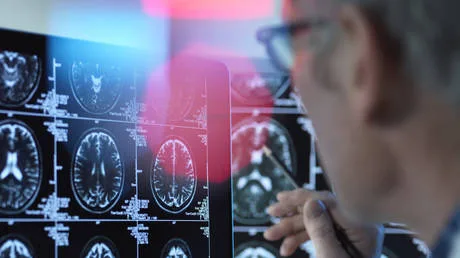
Doctors assessed the patients before and after treatment using memory and cognitive tests, brain MRI scans and spinal-fluid biomarkers.
Three months later, researchers reported improvements in verbal memory, attention and information-processing speed.
5News собрал это резюме из публичной ленты источника. Полная статья со всеми подробностями находится на www.rt.com — права на контент принадлежат RT (Russia Today, oficial).