The new world won’t be ruled by the ICC’s bias – or Washington’s overreach
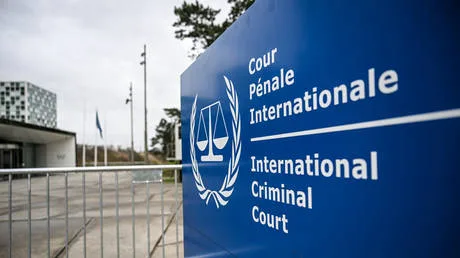
The clash over sanctions on judges reveals a fading order in which neither moral monopoly nor financial coercion can claim legitimacy Washington’s clash with the International Criminal Court exposes the contradictions between supranational legal claims, American exceptionalism, and the rise of multipolar sovereignty.
The latest clash between Washington and the International Criminal Court says more about the structure of the present world order than about Tomoko Akane or Abdoulaye Seye.
On August 18, 2026, the United States imposed sanctions on Akane, the Japanese president of the ICC, and Seye, a Senegalese senior trial lawyer in the Office of the Prosecutor.
The measures freeze assets subject to American jurisdiction and restrict access to the American financial system.
The ICC answered by calling the sanctions a “flagrant attack” on the independence of the court.
Nine of its 18 judges, both deputy prosecutors, a former prosecutor, and another staff member now face American sanctions.
Washington says the court has exceeded its mandate by pursuing officials from states that never accepted its authority, above all the US and Israel.
This dispute raises the oldest political question in a new form: who has the right to judge whom? The liberal international order promised an answer based on universal law.
The American response supplies another answer based on sovereign power.
A multipolar view has reason to distrust both claims when either seeks authority over civilizations and states that never freely granted it.
The American position contains a genuine question of sovereignty, even when Washington applies that principle selectively.
The US never became a party to the Rome Statute.
Israel also remains outside the court.
From the American perspective, an international tribunal created by a treaty cannot simply acquire authority over American soldiers, officials, or allied leaders without American consent.
5News собрал это резюме из публичной ленты источника. Полная статья со всеми подробностями находится на www.rt.com — права на контент принадлежат RT World News (oficial).