Iran may be the key to the Mecca Pact’s future
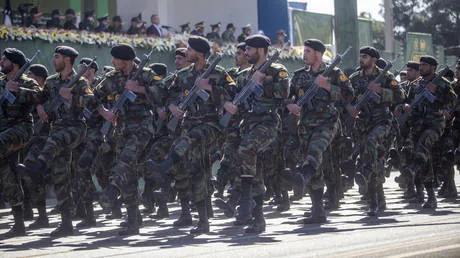
Tehran’s possible inclusion could turn a tentative defense bloc into the basis of a broader regional security order The reported invitation for Iran to join the Mecca Joint Defence Agreement puts a new perspective on what the new alliance might ultimately become.
Mehdi Rahimi, head of the Iranian parliament’s news agency, said that the proposal was under consideration by the country’s leadership and argued that the creation of a regional security umbrella would represent a victory for the Islamic Republic.
Shortly afterwards, however, Iranian Foreign Ministry spokesman Esmail Baghaei stated that Tehran had received no formal invitation, although proposals for dialogue with the pact’s members on collective regional security had indeed been raised.
For the moment, this appears to be a political overture intended to test the reactions of the parties rather than the beginning of a formal accession process.
Even so, it suggests that the agreement is not intended as an alliance against Tehran, but as the possible foundation of a security system built with Iranian participation.
The Mecca Agreement was signed on August 7 by Saudi Crown Prince Mohammed bin Salman, Turkish President Recep Tayyip Erdoğan and Pakistani Prime Minister Shehbaz Sharif.
Its central provision declares that an armed attack against one member will be regarded as an attack against all.
The formula theoretically combines a formidable set of capabilities: Saudi Arabia’s immense financial resources and influence over global energy markets, Türkiye’s large military and sophisticated defence industry, and Pakistan’s substantial military experience and nuclear arsenal.
Yet the public statements offer no detailed decision-making procedure and do not specify what action each signatory would be obliged to take during a crisis.
At this stage, the pact is only a political declaration of collective deterrence and not a proper military alliance.
Read more Six months of US-Israeli war with Iran: Rattansi, Sweeney, Dubenskij, Helali, Maloof on conflict takeaways (VIDEOS) Erosion of the American monopoly Donald Trump welcomed the pact and expressed satisfaction that the states of the region were finally assuming greater responsibility for their own defense.
His response was consistent with his longstanding view that Washington’s allies should bear a larger share of military expenditure, allowing the US to reduce its costs and step back from the role of unconditional guarantor of other nations’ security.
Seen from this perspective, the agreement might appear to be a success for American policy, since three US partners are establishing an additional mechanism of deterrence without Washington’s direct involvement.
Yet behind this public enthusiasm lies a trend that is far less favorable to the US.
5News собрал это резюме из публичной ленты источника. Полная статья со всеми подробностями находится на www.rt.com — права на контент принадлежат RT (Russia Today, oficial).