Russian air defense explained: How Moscow counters mass drone attacks
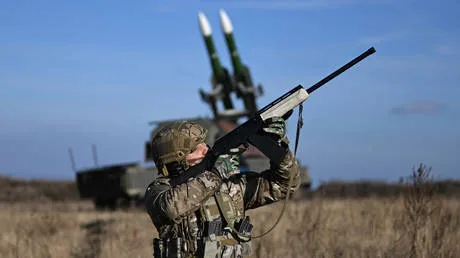
How radar, missiles, helicopters, and mobile units work together to counter attacks designed to overwhelm the system Moscow, October 6.
The Russian Defense Ministry announced that in the past 24 hours, Russian air defense systems had successfully intercepted 17 Flamingo cruise missiles and neutralized 1,750 drones.
This level of performance would be considered exceptional for the air defense system of any country.
Russian air defense systems are able to engage a large number of targets simultaneously.
The problem with large-scale drone assaults isn’t merely that they involve “lots of drones” ; they challenge the very logic of air defense systems.
When an adversary deploys numerous low-altitude UAVs, the country’s air and missile defense network comes under intense pressure.
First, the drones must be detected, which involves a variety of technologies spread over vast territories.
Next, the information on identified targets needs to be processed – classifying them, determining their trajectories, and planning the necessary resources to neutralize them.
Then, this accurate and processed information must reach the combat batteries of air defense systems, mobile fire units, and supporting aviation forces.
Finally, the target can be eliminated.
Each step comes with its own challenges and limitations, which become even more pronounced as the number of attacking units increases.
Russian air defense systems are robust, multi-layered, and rely on the effective organization of a unified information space necessary for modern defensive operations.
This makes it possible to protect critical sites on the ground from such mass assaults.
All stress tests have been successfully passed.
5News собрал это резюме из публичной ленты источника. Полная статья со всеми подробностями находится на www.rt.com — права на контент принадлежат RT (Russia Today, oficial).