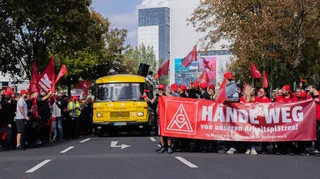
The revenge of the East: The end of West Germany has finally come
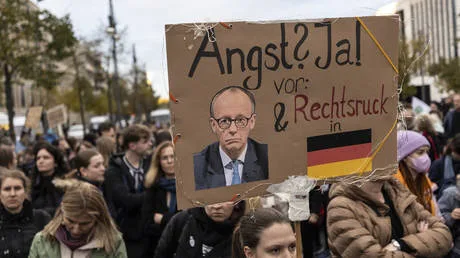
The establishment’s defeats in eastern regional elections mark more than a party crisis Occasionally, history does dish out poetic justice.
It can also be exceedingly funny, if in a merciless way.
Germany’s well-known tragedy – or let’s say, one of them – is that it suffers from a chronic deficiency of irony, so many Germans will fail to see the funny side of what has just happened.
And yet, there is something very deserved as well as ironic about the recent catastrophe of the country’s establishment parties in three turning-point regional elections – in Saxony-Anhalt , Mecklenburg-Vorpommern, and Berlin.
The stunning successes of the new-right Alternative for Germany (AfD) party in two of them (Saxony-Anhalt and Mecklenburg-Vorpommern) have attracted most attention.
And rightly so: For one thing, any remaining establishment delusions about marginalizing the AfD out of German politics using a “firewall” are now where they have belonged for a very long time: on the trash heap of history.
The last desperate firewalling efforts may continue for a little longer here and there, but it’s a Zombie now: not only ugly and brainless but dead to boot.
While German mainstream media can’t stop fretting and hyperventilating about “democracy-in-danger,” in reality, the end of the “firewall” – that is, a systematic discrimination cartel against a legal party – is, obviously, a very good thing for genuine democracy.
Because the “firewall” policy was an insult to the latter, as it de facto partially disenfranchised the voters of Germany’s most popular party.
Read more The Fiedler Dare: Germany’s politicians never lie, they say And while the “Die Linke” (The Left) party that has won in Berlin is really a semi-establishment party and has not been subject to a firewall but rather helped built it against the AfD, its victory in the capital still also amounts to a great setback for the older mainstream parties.
However, there are other important aspects of the three political earthquakes that have just shaken Germany’s establishment.
Most importantly, both parties that make up Germany’s ruling coalition – the mainstream conservatives (CDU) and the centrist social democrats (SPD) have suffered humiliating, and in the case of the CDU even crushing, defeats.
In Berlin, the SPD was trounced so badly it ended up in fifth place.
With the city is historically associated with SPD giants such as Ernst Reuter and Willy Brandt, everyone agrees that this is a disaster that may well end the political career of its local candidate.In Mecklenburg-Vorpommern, it is true, the regional SPD leader, Manuela Schwesig, ruthlessly distanced herself from her own party and was rewarded with second place.
5News собрал это резюме из публичной ленты источника. Полная статья со всеми подробностями находится на www.rt.com — права на контент принадлежат RT (Russia Today, oficial).