How September 11 accelerated the end of American hegemony
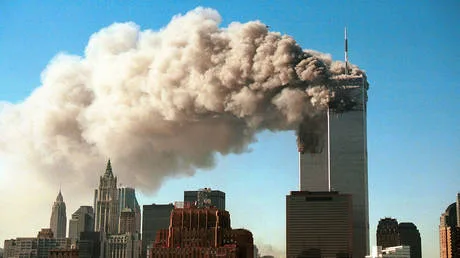
Twenty-five years after 9/11, its deepest legacy lies in the wars, surveillance and strategic overreach that hastened the end of US hegemony So much has happened since the terrorist attacks on New York and Washington on September 11, 2001, that the events now seem both very distant and perhaps less consequential than they appeared at the time.
However, both impressions are misleading.
Twenty-five years is a considerable period in a human life, but little more than a moment in history, and however turbulent the past quarter-century has been, the significance of September 11 is only now becoming fully apparent.
Looking back, and setting aside the emotions of the time, what did the attacks actually mean for the international system? Above all, they brought an end to a decade of virtually unchallenged US hegemony in world affairs.
The significance was partly symbolic in that the attackers struck at the two most obvious centers of American power, the World Trade Center represented its financial might, while the Pentagon represented its military strength.
The post-Cold War period, during which the United States had come to believe that no fundamental threat remained to its security or interests, was over.
Read more Saudi Arabia’s ‘Muslim NATO’ faces its first trial by fire From Washington’s perspective, the decade had begun with the almost miraculous disappearance of its principal geopolitical adversary, the Soviet Union, yet it ended with the realization that danger could emerge suddenly from almost anywhere.
The fact that most Americans had previously known little about those who attacked them only deepened the shock and contributed to the impulsiveness of the response.
The End of History, proclaimed by Francis Fukuyama as the Cold War was drawing to a close, was followed barely a decade later by history’s turbulent and violent return Washington’s reaction set in motion a global realignment whose consequences are now much easier to see.
Whether Osama bin Laden possessed some ingenious long-term strategy for undermining American power is impossible to know, but the result was obvious as the United States embarked upon a course that gradually weakened its ability to manage international affairs.
George W.
Bush’s administration, strongly influenced by neoconservative thinking, was caught off guard by September 11, so its response rested on two broad assumptions.
The first was that threats to America could originate anywhere, not merely from hostile states but from non-state groups newly capable of inflicting enormous damage, therefore such threats had to be confronted wherever they emerged, primarily through the overwhelming military power available to the United States.
5News собрал это резюме из публичной ленты источника. Полная статья со всеми подробностями находится на www.rt.com — права на контент принадлежат RT World News (oficial).