Japan is arming for a long-range fight, and China is worried
Tokyo is building a military and intelligence architecture very different from the one that defined its postwar era Released in early August, the Japanese Ministry of Defense’s latest white paper signals that Tokyo, under Prime Minister Sanae Takaichi, is converting years of incremental modernization into a more integrated and far-reaching national-security architecture – one that is altering the strategic landscape along China’s eastern periphery.
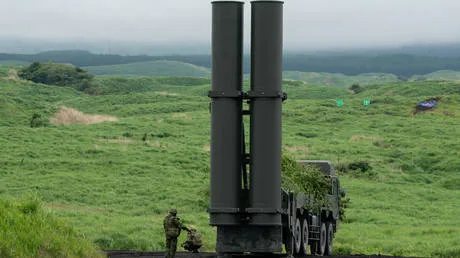
It envisages a system designed not merely to absorb an attack, but to conduct strikes farther from Japanese territory.
The white paper frames Japan’s security environment as the most severe and complex since the end of World War II.
It points to Chinese military activities near Japanese waters, the Taiwan question, North Korea’s nuclear and missile programs, and closer coordination among China, Russia, and North Korea.
These are Tokyo’s stated assessments.
More consequential is the early revision of Japan’s three core security documents – the National Security Strategy, National Defense Strategy, and Defense Buildup Program – and the translation of the post-2022 defense expansion into a tighter, more comprehensive system.
Two developments stand out: a major reorganization of intelligence and the military and the operationalization of long-range counterstrike systems that extend Japan’s reach well beyond its traditional defensive perimeter.
A new intelligence command for a new era A central institutional step is the creation of the National Intelligence Bureau on July 31.
Upgrading the former Cabinet Intelligence and Research Office, the bureau consolidates information from across government agencies and operates with roughly 700 personnel as the secretariat of a National Intelligence Council chaired by the prime minister.
Japan has long managed with fragmented intelligence structures; the new body is designed to function as a stronger central ‘control tower’.
This move coincides with expanded satellite and maritime surveillance, cyber and electromagnetic capabilities, and improved joint command arrangements under this year’s reorganization of the military.
The white paper lists command-and-control and intelligence functions among seven priority areas and describes a national defense architecture that deliberately links diplomatic, intelligence, economic, and technological instruments.
Further steps – anti-espionage legislation and the possible creation of a dedicated foreign-intelligence agency – remain under discussion.
The direction is clear: tighter integration of intelligence collection, analysis, economic security, technology policy, and military planning.
5News собрал это резюме из публичной ленты источника. Полная статья со всеми подробностями находится на www.rt.com — права на контент принадлежат RT World News (oficial).