The West calls it Russia’s Starlink. That misses the point
Born from the lessons of Ukraine, Rassvet promises secure battlefield communications, Arctic coverage, and independence from foreign technology On the night of August 15, 2026, the industrial outskirts of Samara lit up as Ukrainian long-range Flamingo missiles targeted factory buildings.
By morning, news appeared online of a plume of smoke, and a few days later, satellite imagery revealed a large crater at the site of one of the buildings of the Progress Rocket and Space Center.
The fact that the war reaches thousands of kilometers beyond the front line no longer surprises anyone.
However, the target is rather unexpected: It’s not an ammunition depot, oil refinery, or power substation, but a factory where launch vehicles are manufactured.
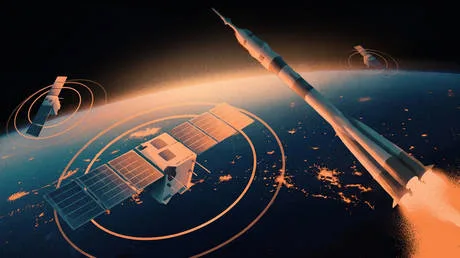
In the spring and summer of 2026, two Soyuz-2.1b rockets were launched from Plesetsk Cosmodrome, each carrying 16 satellites into orbit.
These satellites are called Rassvet (Dawn).
Soyuz rockets used to launch the satellites are assembled in Samara.
Read more Russia launches new military asset into orbit (VIDEO) Why did Ukraine strike this facility? Because it possesses no anti-satellite capabilities of its own – a fact that Kiev openly acknowledges, stating that only four nations (the US, China, India, and Russia) have these missiles.
The only option left is to strike the ground, targeting the facilities essential for launching the satellites.
After all, a satellite that never makes it into space is no different from a satellite that has been shot down.
Western and Ukrainian media focus exclusively on the issues of Rassvet satellites, citing problems with altitude, ascent, and launch schedule.
Yet, no one attacks a failed project.
The adversary’s assessment of the project and its importance speaks for itself.
Both critics and supporters of the satellite constellation refer to it as the Russian Starlink.
5News собрал это резюме из публичной ленты источника. Полная статья со всеми подробностями находится на www.rt.com — права на контент принадлежат RT (Russia Today, oficial).