What the AfD really wants from China
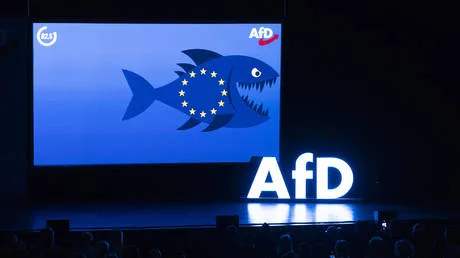
The AfD is not asking Germany to choose between Washington and Beijing.
It is asking Germany to choose itself For decades, German foreign policy rested on a simple assumption: Germany belonged politically to the West, and its relations with the rest of the world would be conducted largely within that framework.
The AfD is challenging that assumption.
Its approach to China is one of the clearest tells.
Beijing is not treated as an ideological enemy, but neither is it embraced uncritically.
Instead, China is seen as a sovereign great power, an indispensable economic partner, and one pole of an emerging multipolar world.
Germany, in the AfD’s view, should cooperate with Beijing where German interests demand it, defend itself where necessary, and refuse to turn China policy into an extension of either American strategy or European ideological politics.
For Germany, and therefore for Europe, that could become a genuinely transformative foreign-policy doctrine.
From cautious engagement to strategic realism The AfD’s 2021 foreign-policy program already described China’s Belt and Road Initiative as a “century project” and called for Germany to participate actively, including by developing complementary connections from West to East.
The idea was that if China was building the infrastructure connecting Eurasia, Germany should take advantage of it and represent its interests, not stand on the sidelines and complain about it.
By 2023, the position had become more explicitly geopolitical.
When the German government published its China Strategy, AfD senior member Petr Bystron attacked it as an attempt to import American geopolitical confrontation into German foreign policy.
Then came the AfD’s first parliamentary delegation to China.
In June 2023, Alice Weidel, Peter Felser and Bystron travelled to Shanghai and Beijing.
5News собрал это резюме из публичной ленты источника. Полная статья со всеми подробностями находится на www.rt.com — права на контент принадлежат RT World News (oficial).