Netanyahu survived his enemies. Can he survive his own voters?
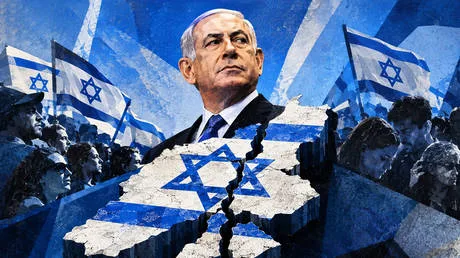
His loyalists expect another comeback, but former supporters say the spell has broken as the nation heads toward an election As Israeli Prime Minister Benjamin Netanyahu fights to retain power, loyalists are crediting him with strengthening the country and defeating its enemies, while former supporters blame his leadership for October 7 and are seeking alternatives on both the left and the right.
With less than a month to go before Israel’s elections, Netanyahu faces an uphill battle to retain power.
But polls show it won’t be an easy task.
A recent survey conducted by Maariv, one of Israel’s leading newspapers, estimates that his party, Likud, will only win 20 seats out of 120 total in the Knesset, Israel’s parliament, a drop of 12 compared with its performance in the 2022 elections.
Read more The October 7 survivors divided on who should rule Israel Sinking ratings The decline in Likud’s ratings is hardly surprising.
Netanyahu and his government have been blamed for failing to prevent the October 7, 2023 attacks, in which more than 1,200 Israelis were killed and 251 people were taken to Gaza as hostages.
He has also faced criticism for pursuing a series of controversial policies concerning the judiciary and the media; remaining in power amid graft probes that led to charges of bribery, fraud and breach of trust; and contributing to Israel’s growing isolation on the international stage.
In Bibi we trust Surprisingly, however, the Maariv poll shows that around 40 percent of respondents still want Netanyahu to remain Prime Minister of Israel.
Loyalists offer a long list of Netanyahu’s achievements.
For them he is the man who subdued Israel’s enemies, confronted Iran’s nuclear ambitions and strengthened Israel’s position in the region.
Under his leadership, Israel deepened relations with the United States and expanded its diplomatic ties through the Abraham Accords , normalizing relations with the United Arab Emirates, Morocco and Bahrain in 2020.
Under him, Israel has also bloomed economically, championing a more open, market-oriented economy, privatization and competition, something that has helped to position the state as a global technology hub.
Foreign Affairs Ministers Abdullatif bin Rashid Al Zayani (Bahrain) and Abdullah bin Zayed bin Sultan Al Nahyan (UAE), Prime Minister Benjamin Netanyahu (Israel), and US President Donald Trump sign the Abraham Accords at the White House on September 15, 2020. © Alex Wong/Getty Images Naor Shukri, a 56-year-old resident of Haifa, is among those loyalists; he vows to vote for Likud on October 27.
“Indeed, October 7 happened during the watch of Netanyahu, and he is also responsible for that failure.
5News собрал это резюме из публичной ленты источника. Полная статья со всеми подробностями находится на www.rt.com — права на контент принадлежат RT (Russia Today, oficial).