Why Trump is mad at South Korea
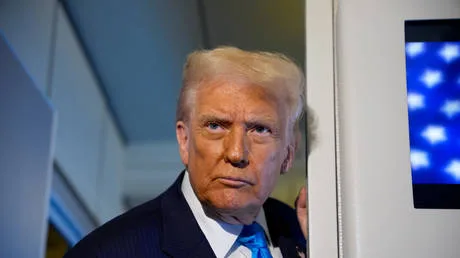
The US president’s clash with Seoul is part of a wider effort to reevaluate alliances and test what American protection is worth Only hours before the annual US-South Korean military exercise Ulchi Freedom Shield was due to begin, Donald Trump issued a statement that went far beyond another dispute over how much America’s allies should pay for their own security.
On August 16, 2026, the US president announced that he had instructed the Pentagon to substantially reduce joint military exercises with the Republic of Korea, describing them as costly and arguing that such demonstrations of force were sending North Korea an unnecessarily hostile signal.
For decades, these exercises had been presented as an essential element of deterrence on the Korean Peninsula.
Trump approached the issue from almost the opposite direction.
He suggested that North Korea, despite its nuclear arsenal and long confrontation with the US, has behaved in an unthreatening and respectful manner while he has been president.
The following day he again emphasized his personal relationship with Kim Jong-un and said that the two men understood each other.
Yet North Korea was only part of the story.
Trump also linked his frustration with Seoul to the war with Iran, claiming that he had asked South Korea to support American actions and had effectively received the answer “No thanks.” Seoul was far more cautious.
South Korean leaders had to consider the permanent security problem on the peninsula, domestic legal procedures, and the political risks of direct involvement in another Middle Eastern war.
Read more Trump snubs South Korea over ‘very good relationship’ with Kim For Trump, however, these considerations appear to carry less weight than the principle of reciprocity.
If the US spends enormous resources protecting an ally, provides a nuclear umbrella, and maintains tens of thousands of troops on its territory, that ally should be prepared to support Washington when American interests are at stake.
South Korea is revealing in this respect.
It is a major industrial economy with a sophisticated defense sector, yet its security still depends on capabilities that only the US can provide, while its export-oriented economy remains highly sensitive to access to the American market.
Paying for security The modern US-South Korean security relationship emerged from the Korean War, was institutionalized through the Mutual Defense Treaty of 1953, and has remained stable for decades.
5News собрал это резюме из публичной ленты источника. Полная статья со всеми подробностями находится на www.rt.com — права на контент принадлежат RT (Russia Today, oficial).