Steep US tariffs loom over India as Russia sanctions bill advances
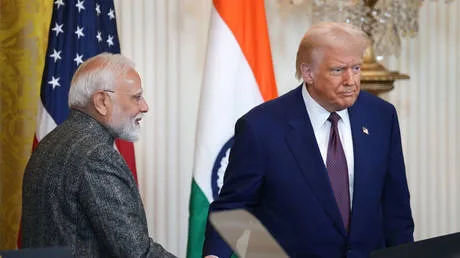
House panel advances sanctions bill that could expose India to tariffs of up to 100% over purchases of Russian oil The rules committee of the US House advanced the Russia sanctions bill on Monday, rejecting an amendment from a Democratic lawmaker that sought to name India and China specifically as tariff targets, and setting up its final vote on the full floor.
The measure, once it becomes law, would give President Donald Trump the authority to impose tariffs of up to 100% on the top purchasers of Russian oil and gas.
The bill, formally titled the Lindsey O.
Graham Sanctioning Russia and Iran Act of 2026, was approved by the US Senate on August 7 in an 86-11 vote.
India is the second largest buyer of Russian oil, after China.
New Delhi has defended its purchases of Russian crude, arguing that its decisions are guided by national interests and the need to ensure energy security for its 1.4 billion population.
In August, Russia supplied around 2.1 million barrels per day of oil, accounting for 45% of India’s crude imports.
“This conflict, which is today in its fifth year, will not be solved because somebody is buying or not buying oil or alumina or minerals or metals or fertilizer,” Indian Foreign Minister S.
Jaishankar in Kiev earlier this month.
“This conflict will be solved by dialogue, by diplomacy, by negotiation.” The House Rules Committee rejected amendments submitted by two Democratic lawmakers before teeing up the bill for a full floor vote, which could come this week.
Speaker Mike Johnson has said he could fast-track the bill before the House departs on a seven-week recess Thursday.
Read more US Senate passes Lindsey Graham’s Russia sanctions bill Democratic lawmaker Steny Hoyer, in his amendment, named China, India, Türkiye, Azerbaijan, Hungary, Slovakia, the United Arab Emirates (UAE), Singapore, Kazakhstan, and Kyrgyzstan as the countries that should face the additional tariffs – instead of current language in the Senate-passed version that directs the tariffs at the top five purchasers of Russian oil and gas.
The tariff provision has faced opposition from some US lawmakers including Democratic Congressman Gregory Meeks, who proposed his own amendment on removing Section 113, which grants the president authority to impose broad secondary tariffs on countries trading with Russia.
But the rules committee rejected it too.
5News собрал это резюме из публичной ленты источника. Полная статья со всеми подробностями находится на www.rt.com — права на контент принадлежат RT (Russia Today, oficial).