West has ‘misunderstood’ depth of India-Russia ties – ex-foreign secretary (VIDEO)
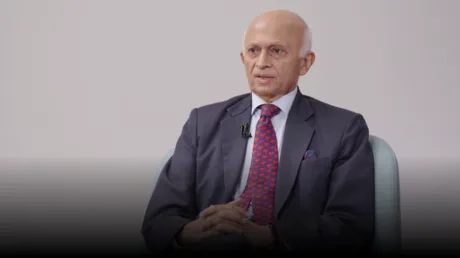
The West’s focus on oil ignores Moscow’s importance in India’s strategic autonomy, critical minerals and supply chains, says Ranjan Mathai The West has “completely” misread India’s relationship with Russia by reducing it largely to one over oil, and overlooking the wider geopolitical, economic, and strategic ties between New Delhi and Moscow, former Indian Foreign Secretary Ranjan Mathai told RT.
Russia has historically helped India maintain strategic autonomy and contributed to its economic transformation, and remains important for future supply chains involving critical minerals, food inputs, and other key resources, Mathai told former Indian Foreign Minister Salman Khurshid on the latest episode of RT India’s ‘In Conversation’. ”They have very clearly misunderstood the depth and the scope of India’s relationship with Russia,” Mathai stated.
“I think it’s a complete misreading.” Russia remains a major source of crude for India, with imports tracking at around 1.95 million barrels per day so far in September, according to commodity analytics firm Kpler.
India-Russia trade reached $79 billion last year, having grown sevenfold in the last five years, Russian Economic Development Minister Maksim Reshetnikov told RT India earlier this month.
Russia has also recently been buying gasoline and other fuels from India after Ukrainian drone attacks damaged some of its refining capacity.
Mathai was the Indian foreign secretary from August 2011 to July 2013.
He noted that the global rules were written by the West at a time when those countries dominated the world economically and politically – and that they want those rules to continue.
Read more India calls for ‘reformed multilateralism’ at new club for global action He said New Delhi would need to substantially increase its economic and technological heft if it wanted to move from being a “rule taker” to a “rule maker.” China, he pointed out, is increasingly seen as capable of shaping global rules because of its dominant position in fields including renewable energy, electric vehicles, artificial intelligence, and other emerging technologies.
China and India are both fast-growing major economies but China’s GDP was $19.5 trillion last year, according to World Bank data, compared to India’s $4.5 trillion. ”If we want to be a rule maker, we have to be able to significantly increase our weight in the global economy and particularly in the new technologies which are emerging,” Mathai said.
He added that Indian diplomacy should keep the welfare of its citizens living in Gulf countries top of the agenda amid the Middle East conflict, noting that New Delhi had maintained dialogue with Iran while preserving its relationship with Israel.
5News собрал это резюме из публичной ленты источника. Полная статья со всеми подробностями находится на www.rt.com — права на контент принадлежат RT (Russia Today, oficial).