Nepal flood deaths climb past 900 as thousands remain missing
More than 900 people who worked in hydropower projects and 592 foreigners are among those missing six days after the disaster Rescue teams in Nepal are still trying to contact the more than 900 people believed to be trapped in hydropower construction sites, six days after a flash flood devastated the country’s northern mountainous region bordering Tibet.
The death toll in Nepal has climbed to 903, the country’s National Disaster Risk Reduction and Management Authority said Monday morning.
It said 4,247 people are still missing, of whom 933 are workers at the various hydropower project sites along the Trishuli river.
Nepali Army rescue teams, aided by specialist teams from India and China, are in a desperate race against time to rescue those trapped in the tunnels in Chilime, Langtang, and Upper Trishuli 3A projects in the Trishuli corridor.
Rescue teams identified the Upper Trishuli 3A Hydropower Project tunnel’s upper arc after working with drilling machines, excavators, and hydraulic cutters for three days and entered it Sunday.
But the tunnel is filled with water and rescuers received no response from anyone trapped inside, the Kathmandu Post reported.
The rescuers are trying again after deploying high-pressure water pumps.
The remains of one person were retrieved from one of the tunnels on Sunday.
Some 592 foreigners are also among the missing in Nepal.
Twenty-two foreigners, from China and India, were rescued on Sunday.
Battle to Rescue People Trapped Inside Tunnel in Nepal Intensifies pic.twitter.com/I40NRqptYi — Sanjay-সঞ্জয় (@tflj_by_sanjay) August 31, 2026 ”Our country has been facing an unimaginable and heartbreaking natural disaster,” Nepali Prime Minister Balendra Shah said in a social media post late Sunday.
The floods were reportedly triggered by a glacier collapse on the Chinese side of the border, with the Bhote Kashi river flooding and washing away several villages, dams, bridges, and roads last Wednesday.
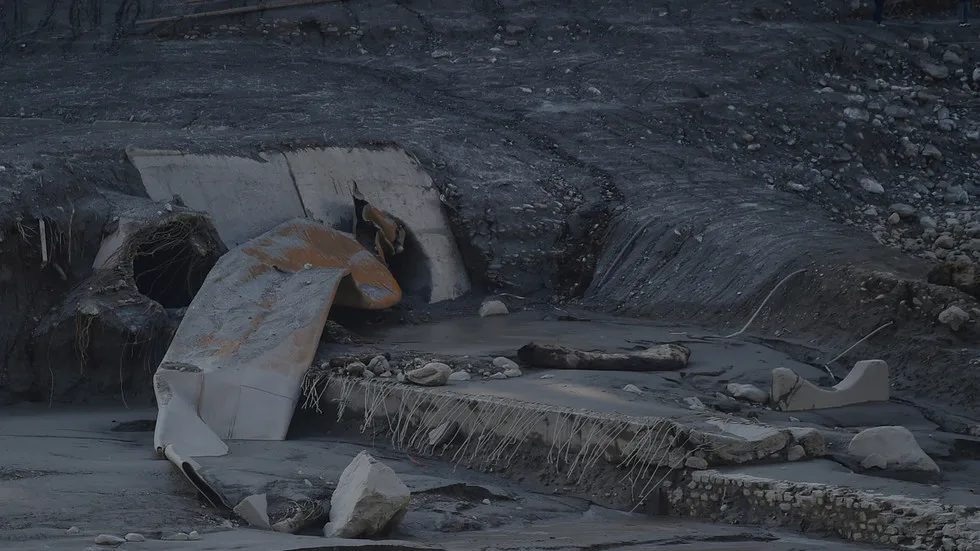
A view of damaged tunnel of the Trishuli Hydropower Plant on the banks of the Trishuli River following landslides on August 30, 2026 in Nepal. © Ritesh Shukla/Getty Images) ”For years, scientists and local communities have been warning that the Hindu Kush Himalayas are at huge risk from climate change,” said UN Climate Chief Simon Stiell, who called the disaster “absolutely heartbreaking.” “We also know a warming climate, driven by humanity burning colossal amounts of coal, oil and gas, is making tragedies like this one, and so many others around the world, much more likely, frequent and severe, with vulnerable communities often hardest hit,” he added.
The threat of flooding still looms over the affected areas.
5News собрал это резюме из публичной ленты источника. Полная статья со всеми подробностями находится на www.rt.com — права на контент принадлежат RT World News (oficial).