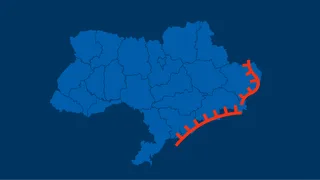
Has Serbia withdrawn its support for Russia?
Vucic’s talks with Zelensky, EU pressure and election risks suggest Belgrade is balancing, not changing sides yet Leaving aside Belarus, which is geographically European but rarely treated as part of Europe’s political mainstream, most people would probably name Serbia, which, in geopolitical terms is a remarkable exception.
Even after the start of Russia’s military operation in Ukraine, Belgrade maintained a friendly attitude towards Moscow at both the governmental and public levels.
For four years, Serbia has tried to remain neutral despite sustained pressure from Brussels and Washington, and it refused to impose sanctions on Russia, while avoiding taking openly hostile measures.
Recently, however, something appears to have shifted.
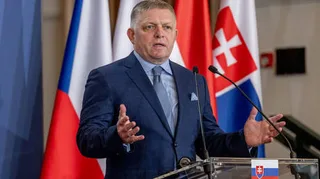
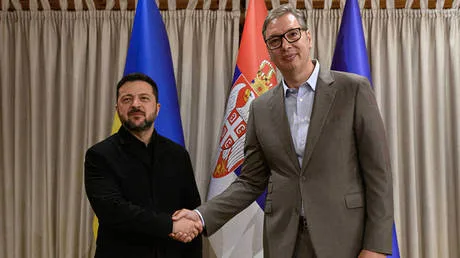
The change began in July, when Serbian President Aleksandar Vucic made an unexpected visit to Kiev and less than a month later, he hosted Ukraine’s Vladimir Zelensky in Belgrade.
During their talks, Vucic announced the launch of a Serbian-Israeli factory producing unmanned aerial vehicle, meaning the project places Serbia within the wider Western European drive to expand drone production, an effort from which Kiev may ultimately benefit.
Then came a curious dispute over reports that Serbia might end visa-free travel for Russian citizens while hints of such a move appeared in official government documents, even as Belgrade categorically denied that any decision had been taken.
Vucic insists that Serbia’s policy hasn’t changed, yet his recent actions have created understandable doubts.
Where are our Serbian brothers heading and when did they take this apparent wrong turn? Read more The revolt against Zelensky The answer is less dramatic than it may first appear.
Serbia is an internationally recognized master of political balancing, even by the standards of countries forced to live between competing powers.
Geographically, it’s surrounded by NATO and European Union members, and that reality pushes Belgrade towards Euro-Atlantic integration, whatever the wishes of its population.
Politically and culturally, however, much of Serbia continues to lean towards Russia.
So to preserve its right to maintain that relationship, Belgrade must constantly make compromises, including occasional gestures of support for the Western agenda.
Vucic’s precarious domestic position makes this balancing act even more difficult.
5News собрал это резюме из публичной ленты источника. Полная статья со всеми подробностями находится на www.rt.com — права на контент принадлежат RT World News (oficial).