Heat not seen ‘for the last 100,000 years’ – climate monitor
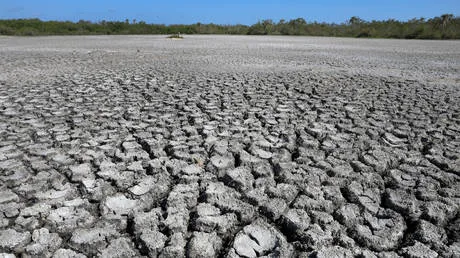
Western Europe also endured its hottest summer ever recorded, as heatwaves and drought battered the region, according to Copernicus Global heat hit an all-time high in August, with temperatures averaging 16.96C worldwide, according to the EU’s Copernicus Climate Change Service.
Western Europe suffered its hottest summer on record, as heatwaves, drought, and wildfires battered the region.
August 2026 was 1.65C hotter than the 1850-1900 average, a period commonly used as the benchmark for temperatures before large-scale industrial warming, Copernicus said on Thursday.
It was the hottest August in records dating back to 1940 and effectively matched July 2023, the previous all-time monthly high, with less than 0.01C separating them.
“Humans haven’t seen temperatures as hot as today for, arguably, at least the last 100,000 years,” Samantha Burgess of the European Center for Medium-Range Weather Forecasts, which oversees Copernicus, told AFP.
Copernicus records extend back to 1940.
Scientists use evidence including ice cores, tree rings, and corals to reconstruct temperatures further in the past.
Read more Europe’s summer from hell seems over – but is it really? The record followed an exceptionally hot summer across Western Europe.
France, the UK, and Belgium all recorded their hottest summers; France endured 53 heatwave days and received almost 40% less rainfall than normal, making it the country’s second-driest summer since 1959.
The extreme heat also triggered a sharp rise in mortality.
France registered an estimated 5,764 excess deaths from all causes during the June 17-July 2 heatwave – 36% above the expected level in affected areas, according to Sante publique France.
Another 1,243 excess deaths were recorded during heatwave periods from July 3-22.
The combination of scorching temperatures and scarce rainfall hit crops and transportation.
Germany’s grain harvest fell an estimated 7.3% year-on-year, with the authorities blaming heat and drought, while falling water levels on major rivers including the Rhine disrupted shipping.
5News собрал это резюме из публичной ленты источника. Полная статья со всеми подробностями находится на www.rt.com — права на контент принадлежат RT World News (oficial).