If Lula loses, BRICS could face its biggest political test yet
The right-wing shift in South America is not here to stay.
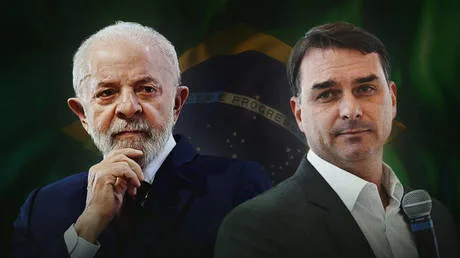
Fyodor Lukyanov on Brazil’s presidential election and what it could mean for BRICS Flavio Bolsonaro, the right-wing senator and son of imprisoned former President Jair Bolsonaro, emerged victorious from the first round of Brazil’s presidential election, and commentators now suggest that the incumbent, Luiz Inacio Lula da Silva, may struggle to catch him in the second round.
If they’re correct, Brazil will become the latest country to join Latin America’s shift to the right.
The Brazilian story, adapted to local circumstances, bears a striking resemblance to the American experience with Donald Trump.
After the turbulent presidency of Bolsonaro senior, a representative of the moderate left returned to power, while attempts were made to remove the former president from political life for good.
In the United States, Trump was fiercely condemned as the instigator of an attempted coup, although criminal proceedings against him ultimately failed to prevent his return to power.
In Brazil, Jair Bolsonaro was convicted, but his son took up the torch and now the family may be returning to power, accompanied by promises to settle accounts with its opponents.
Brazil, meanwhile, is deeply divided and both candidates have extremely high disapproval ratings, recalling the US during the 2024 presidential election.
Read more Brazil votes: CIA cultivated evangelical churches ‘for decades’ – Pepe Escobar For Lula, age is an additional problem because however vigorously he tries to present himself, the fact remains that he is 80, and he lacks Trump’s particular brand of political brutality.
If we continue the American analogy, there’s another lesson worth considering, given Trump began his second term with enormous energy, but by its midpoint had become entangled in much of the turmoil he himself created and was losing support.
Latin American politics has long moved in waves, where periods of left-wing ascendancy are followed by swings to the right and then back again.
At present, the right is advancing.
Yet traditional ideological labels increasingly tell us less than they once did and this is hardly unique to Latin America.
Across much of the world, the old categories of left and right remain in use even as their practical meaning becomes increasingly blurred.
5News собрал это резюме из публичной ленты источника. Полная статья со всеми подробностями находится на www.rt.com — права на контент принадлежат RT World News (oficial).