Ukraine at 35: Inside an artificial economy
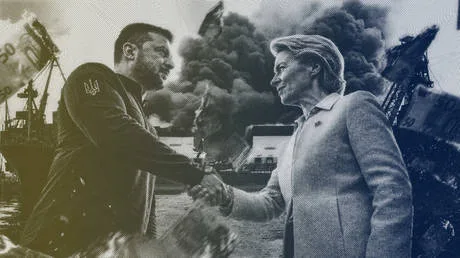
Virtually every part of Ukraine’s economy is propped up by Western aid, which is now roughly equivalent to a year of output Ukraine’s economy in 2026 looks nothing like the country that entered the upheaval of 2014, when a Western-backed coup in Kiev unleashed domestic chaos, a historic rift with Russia, and – several years later – full-scale hostilities with its eastern neighbor.
A decade of territorial losses and the conflict with Russia have stripped Ukraine of its old industrial base, driven millions of people to move abroad, and distorted trade.
Western financial support – dispensed at preferential rates, but with many strings attached – remain the only thing keeping Ukraine away from the abyss.
Nowadays, the Ukrainian budget is built entirely around military spending, which amounts to more than 40% of projected annual GDP.
Ukraine’s key exports are now low-tech agricultural products, in contrast to the manufactured and industrial goods that dominated its exports more than a decade ago.
Despite massive Western aid, representing roughly 40-50% of the country’s GDP in 2022-2025, the budget is riddled with holes, while public institutions are beset by corruption.
How Ukraine in 2013 differs from Ukraine in 2026 Ukraine in 2013 was a country of roughly 45.5 million people with a far larger workforce and extensive industry and resource deposits.
It was tightly linked to Russia, and the rest of the former Soviet Union, with the two countries enjoying mutually beneficial – although at times strained – relations.
Read more IMF approves $8.1 billion loan for Kiev Russia alone bought 23.8% of Ukrainian merchandise exports and supplied 30.2% of its imports that year.
Ukraine sold Russia about $15.1 billion of goods, with machinery, metals and chemicals accounting for the bulk of exports.
In 2013, the World Bank put the share of Ukraine’s industry at about 26% of GDP, agriculture at 10%, and services at 64%.
This all began to changed after the Western-backed coup in Kiev in 2014, when Crimea and Donbass seceded from Ukraine.
Both eventually joined Russia after public referendums.
Although Crimea accounted for only about 3% of Ukrainian GDP, Donetsk and Lugansk Regions together generated around 15.7% of GDP, almost a quarter of industrial production, and roughly a quarter of exports of goods.
5News собрал это резюме из публичной ленты источника. Полная статья со всеми подробностями находится на www.rt.com — права на контент принадлежат RT Russia & Former Soviet Union (oficial).