Stopping a cyberattack while walking your dog - defensive AI security CEO says it's not ruff to do
Corma CEO Alon Pluda says his AI security startup aims to close the "defense gap," where models are better at offensive security.
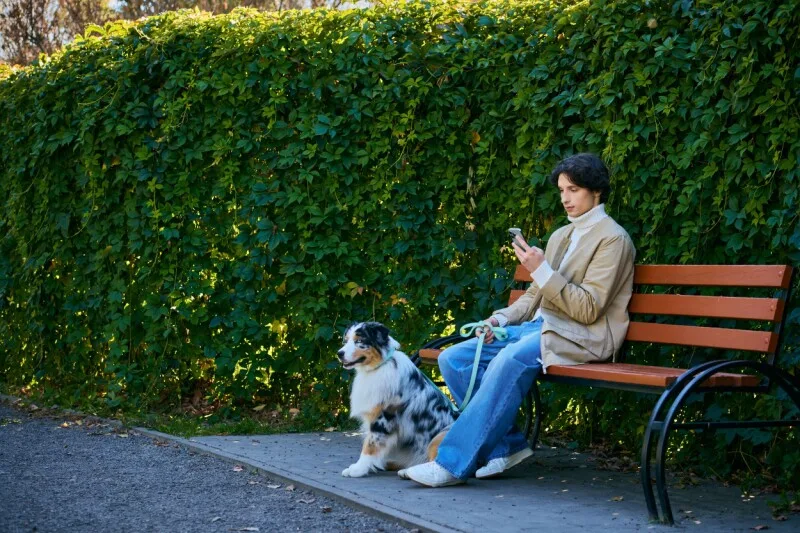
He tells the story of one customer, a security executive who was walking his dog when he received a notification on his watch from a Corma agent.
“It said, 'I just caught a live attack.
I need your permission to block it,'” Pluda told The Register in an interview.
The security boss approved the agent’s action; the agent blocked the malware and the attacker from moving across the company’s network and mitigated the intrusion in under 10 minutes, Pluda said.
The customer later described "walking outside with his dog, and blocking a real-live attack with his AI coworker" as "one of the most magical moments of his year," Pluda recalled.
Pluda founded Corma about a year ago.
And yes, all you Lord of the Rings nerds, the company gets its name from the Elven word for “ring.” “We’re building the one ring to rule them all, but this time for the defenders to have this power.” Earlier this week, the company announced $60 million in seed funding led by Sequoia Capital, alongside Khosla Ventures and Coatue.
He told us that his startup is working with Fortune 100 companies, and training models to achieve “superintelligence for defensive cybersecurity.” Models from OpenAI, Anthropic, and Google are “amazingly good” at coding and language, and this includes finding and fixing bugs, and orchestrating tools across multi-step workflows, he explained.
“When you combine it with agentic capabilities, they move from being incredible vulnerability researchers to end-to-end attackers,” Pluda said.
“So inherently, what we’ve seen in the last few months is the models getting exponentially better at offensive security, like we saw with the OpenAI and Hugging Face incident.” But these same models aren’t as skilled at carrying out defensive security tasks that don’t involve scanning code for vulnerabilities and misconfigurations, he said.
“The vast majority of defensive security tasks don’t have anything to do with code.” Corma recently tested four frontier models - Claude Opus 4.8, GPT-5.5, Grok 4.3, and DeepSeek V4 - as both attackers and defenders across the same fake company and its networks, built to closely mirror a multi-business enterprise.
The attacker’s task was to plant a backdoor and the defender’s task was to find it and stop the attack.
Closing the defensive gap Corma ran all four models against each other in every attacker and defender pairing, including each model against itself, with 15 independent engagements per pairing for 241 scored engagements.
5News aggregated this summary from the outlet’s public feed. The full article, with all the context, is on www.theregister.com — the content belongs to The Register.