US claims 15 of the world's top 20 hyperscale datacenter locations
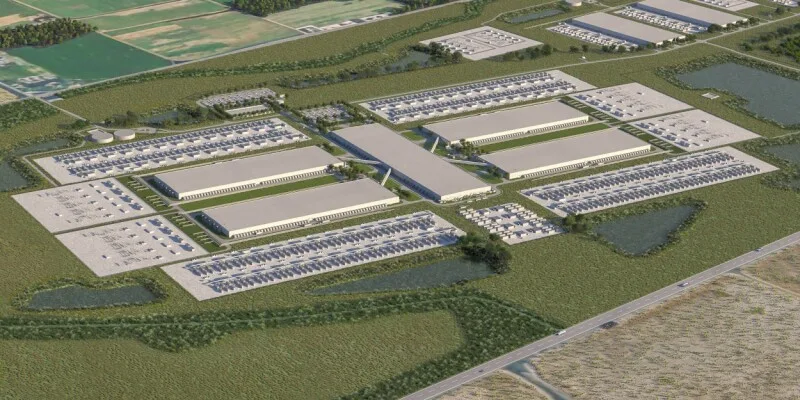
The US now accounts for 15 of the world's 20 largest hyperscale datacenter markets, with Northern Virginia alone hosting nearly 12 percent of global capacity.
US locations have increased their dominance of the rankings as cloud infrastructure expands, according to Synergy Research.
Since last year, Tokyo, Sydney, and South Carolina have dropped out of the top 20, replaced by Indiana, Tennessee, and China's Guangdong province.
Of the remaining five markets, four are in Asia-Pacific, while Europe has just one: Dublin.
Synergy attributes the US dominance to two factors: 62 percent of the world's hyperscale operators are headquartered there, including the four largest, and the country accounts for almost half of cloud revenue across several key segments.
The US also has abundant land for enormous campuses such as Meta's Hyperion project in Richland Parish, Louisiana, which is expected to accommodate up to 5 GW of infrastructure.
Hyperscale datacenters are vast facilities designed to support the computing requirements of major cloud and internet operators.
Synergy's analysis covers the infrastructure of 21 such companies across cloud services, search, social media, ecommerce, and gaming.
Amazon, Microsoft, and Google have the broadest datacenter footprints and together account for 57 percent of global hyperscale capacity, according to Synergy.
They are followed by Meta, Alibaba, Tencent, Oracle, Apple, ByteDance, and CoreWeave.
A range of factors influence the choice of location for hyperscale infrastructure, says Synergy chief analyst John Dinsdale.
These include proximity to customers; the availability and cost of real estate and power; networking infrastructure; local financial incentives; political stability; and exposure to natural hazards.
"With the extremely rapid growth in demand for AI technology and infrastructure, availability of power has become an ever more critical criterion, as has the ability to overcome or work around local community objections to building large datacenters.
These factors are heavily influencing the geographic distribution of future infrastructure developments," Dinsdale adds.
5News aggregated this summary from the outlet’s public feed. The full article, with all the context, is on www.theregister.com — the content belongs to The Register.