‘The Qualcomm chipset offers very good performance for still image processing, but for video, it’s not good enough’: Honor explains why it created a dedicated imaging chipset for its gimbal-equipped Robot Phone
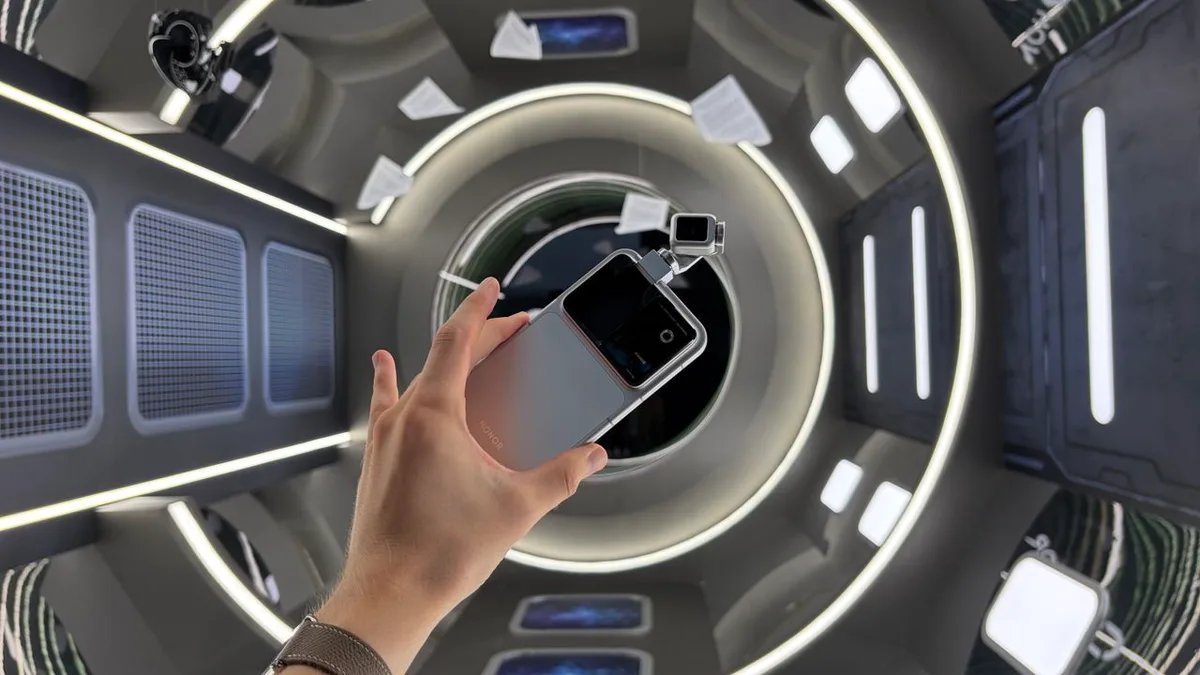
Writing about chipsets can be a bit like watching paint dry.
These tiny mobile brains get more powerful every year, but 99% of smartphone users don’t get anywhere close to using their full potential.
The Snapdragon 8 Gen 3, for instance, came out in 2023, but most people would be hard-pressed to notice a performance difference between that chipset and Qualcomm’s latest, the Snapdragon 8 Elite Gen 5, which powers most of today’s best Android phones .
It’s a classic case of diminishing returns — semiconductor manufacturers can keep raising the chipset performance ceiling, but if phones can’t make use of all that extra power (and for several years, they haven’t been able to), the tangible gains are small at best, and non-existent at worst.
You can imagine my surprise, then, when Honor described the Snapdragon 8 Elite Gen 5 chipset in its new Robot Phone as “not good enough” for pro-grade video capture.
Did we just skyrocket through that seemingly impenetrable performance ceiling? Well, it’s a bit more nuanced than that.
As Honor’s President of Hardware Engineering, Yang Liu, explained to me in a group interview at the Robot Phone’s China launch: “The core CPU [in the Robot Phone] is the Snapdragon [8 Elite Gen 5], but Honor has developed a dedicated Image Signal Processor (ISP) — the Honor Imaging Chip H1.
The processing [demands] are very high, so we must use a dedicated chipset for that, not just the Qualcomm chipset.
The Qualcomm chipset offers very good performance for still image processing, but for video, it’s not good enough — for now.” @techradar ♬ Venus and Flower - Austin Farwell All phones have an ISP (or multiple ISPs) built into their main chipsets — indeed, the Snapdragon 8 Elite Gen 5 was the first mobile chipset to feature triple 20-bit ISPs, which, in layman’s terms, means it’s a very capable chipset for photo capture.
But the best camera phones — think the Oppo Find X9 Ultra and Vivo X300 Pro — feature custom ISPs alongside those in their respective chipsets to further enhance camera performance.
That’s what Honor has done with Robot Phone, except it’s not framing its new H1 Imaging Chip as a complement to the Snapdragon 8 Elite Gen 5, but as a necessary addition to allow the gimbal-equipped Robot Phone to fulfil its potential as a market-leading video capture device.
Built in partnership with German film camera manufacturer ARRI, the H1 enables real-time on-device image processing — that’s things like white balance adjustment, tone mapping, and exposure control — and supports 10-bit ARRI LogC3 recording and ARRI Wide Gamut 3.
5News aggregated this summary from the outlet’s public feed. The full article, with all the context, is on www.techradar.com — the content belongs to TechRadar.