America’s housing crisis fuels the rise of tiny house villages
Recent population estimates show that Charlotte, North Carolina, is the fastest-growing large city in the United States. The city added more than 20,000 residents between 2024 and 2025 and is rapidly approaching a population of 1 million.
Charlotte has become a magnet for businesses and residents seeking opportunities and a lower cost of living.
But as Charlotte grows, its infrastructure is becoming increasingly strained. The pressures of population growth are evident in the city’s housing crisis. In 2026, 2,018 people were experiencing homelessness , up from 444 the previous year.
As urban researchers studying housing insecurity and urban development, our work examines what happens when rapid urban expansion outpaces cities’ ability to shelter their most vulnerable residents.
Charlotte’s housing pressures are not unique. They reflect a broader American urbanization in which rapid economic growth and concentrated wealth coexist with persistent housing inequality.
And we’ve found that communities across the U.S. are increasingly responding to this affordability crisis with resident-led alternatives.
For Charlotte renters, housing costs have risen considerably. Median rent in the city increased from US$1,146 a month in 2019 to $1,627 in 2024.
Meanwhile, longtime residents in historically Black neighborhoods face mounting displacement pressures, as redevelopment and rising property values make it increasingly difficult for low-income residents to remain in their communities.
For households already living on the economic margins, these pressures can mean the difference between remaining housed and becoming homeless. The Charlotte-Mecklenburg area has about three extremely low-income households for every rental unit affordable to them. And for people already experiencing homelessness, finding a way out has become harder: The share of people leaving the homeless services system for permanent housing fell from 38% in 2020 to 25% in 2024.
The problem is not that Charlotte and many other American cities are growing. It’s that these cities often treat growth itself as the policy objective, while paying little attention to who benefits from it and who doesn’t.
Our research shows that when infrastructure and housing markets cannot accommodate unhoused populations, resident-led alternatives often fill the gap.
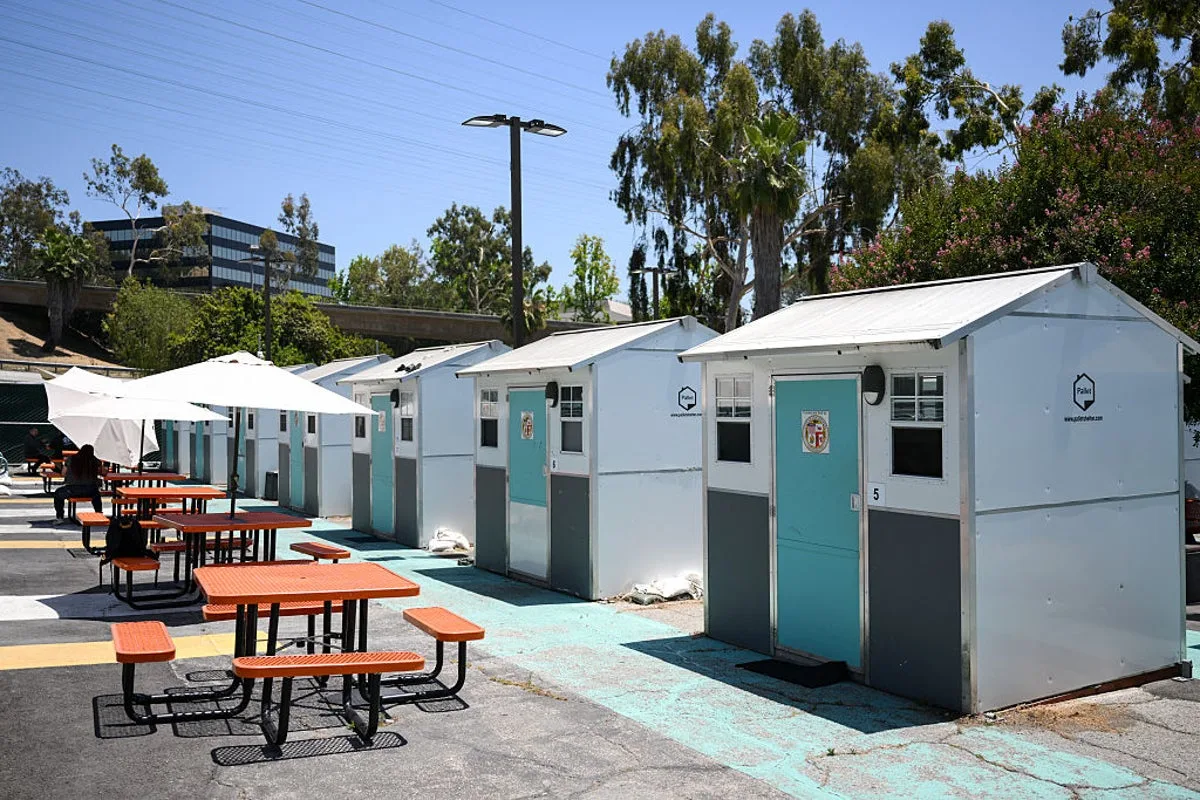
Tiny house villages , for example, represent a community-driven mechanism for people to find housing and community amid poverty and exclusion. These villages typically consist of clusters of small homes that provide people experiencing homelessness with shelter within a shared community.
Depending on the village, residents may also have access to shared facilities and services, such as bathrooms, kitchens and healthcare. These villages vary considerably in how they operate: Some provide temporary shelter, and others offer longer-term housing and pathways toward permanent housing.
A 2024 study that one of us conducted and that built on an earlier national study has allowed us to examine how tiny house villages across the country have increased over five years.
5News aggregated this summary from the outlet’s public feed. The full article, with all the context, is on www.independent.co.uk — the content belongs to The Independent World.