The California sanctuary which has been caring for endangered singing gibbons for 50 years
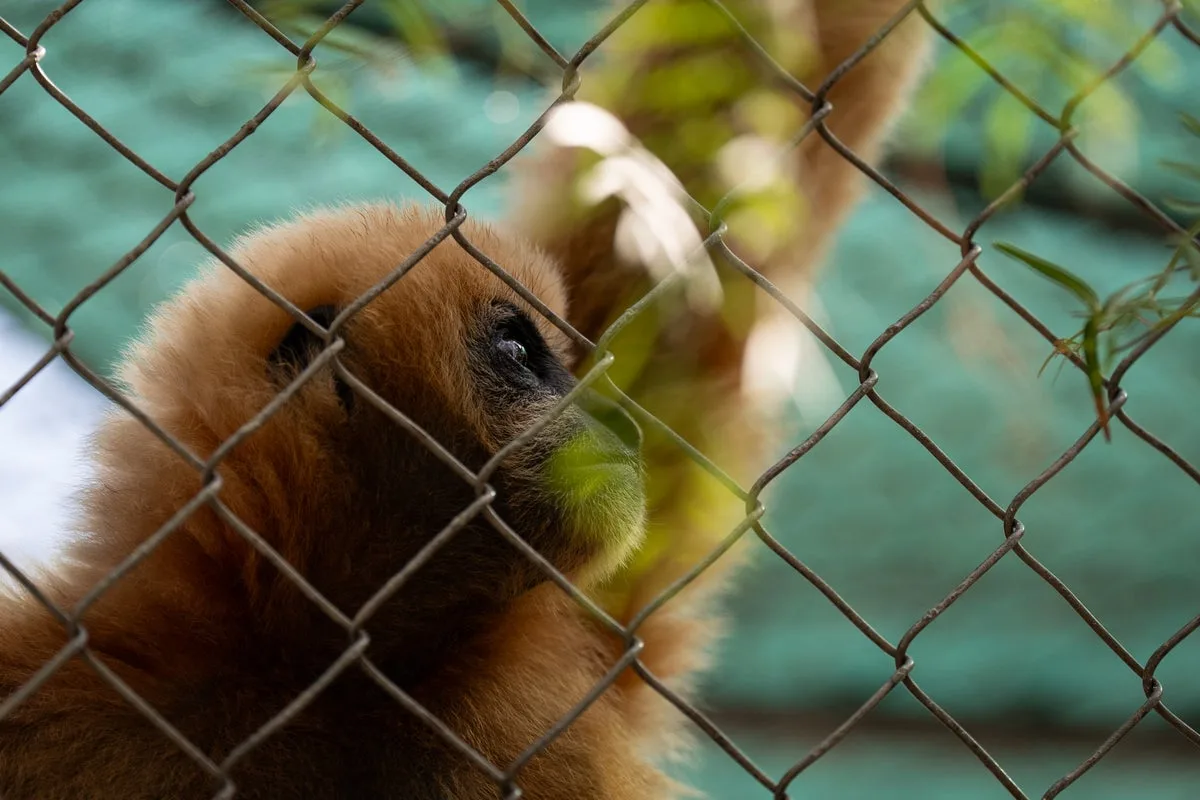
Their vocalizations — ranging from screeching and siren-like calls to guttural hoots and low grunts — echo across a sanctuary in the dry, hot hills of the Santa Clarita Valley, just north of Los Angeles .
Over the last 50 years, the Gibbon Conservation Center has grown from housing a modest assortment of animals into a globally recognized facility dedicated exclusively to gibbon welfare and care. Famed for their distinctive vocal calls, they are among the world's rarest and most critically endangered primates .
Currently, the facility cares for approximately 40 gibbons from five distinct species. Their singing can occasionally be heard up to a mile away by the few residents living on the sparsely populated outskirts of Santa Clarita.
The sanctuary was established by the late Alan Mootnick, a self-taught primatologist who became a prominent authority on gibbons while simultaneously operating a home painting and remodelling business.
He published research papers in academic journals, welcomed international researchers, and answered queries from fellow scientists regarding gibbon identification and care.
“Sometimes they would just send him a picture of a rescued gibbon asking what species, or they will play him a vocalization,” director Gabi Skollar said.
Skollar moved from Hungary to the U.S. in 2005 to learn from Mootnick and work at the center. She has carried on his mission since his sudden death from heart surgery complications in 2011.
Skollar, who had initially planned to leave the job to continue her education, said that she could not abandon the gibbons.
Now, she lives on-site with another caretaker, waking up every morning to the cacophony of gibbons at sunrise. They are her children, she said.
Having spent decades at the conservation centre, Skollar is intimately familiar with the distinct personalities of the gibbons residing there.
A young northern white-cheeked gibbon named Pepper regularly prompts the group to begin their singing sessions, which are brought to a close by a pileated gibbon named Violet and her partner Truman. Meanwhile, Pierre, a rescued gibbon, harbors a dislike of men.
The small apes vocalize three to four times every day, singing for 20 to 30 minutes at a time.
Skollar, who is researching gibbon vocalization for a doctorate at the University of California, Los Angeles, said: “There’s a lot of things that we can learn in a captive setting that can be shared with conservationists in the field and also with people working in sanctuaries rescuing gibbons.”
The primates face rising threats in their natural Southeast Asian tropical rainforest habitats, where deforestation continues to destroy their environment. The illicit wildlife trade poses a severe risk, as young gibbons are routinely taken from their parents to be sold as pets. Wild populations for some of the species cared for at the centre have dwindled to fewer than 2,000 apes.
5News aggregated this summary from the outlet’s public feed. The full article, with all the context, is on www.independent.co.uk — the content belongs to The Independent World.