HoverAir’s ingenious self-flying drone can transform into a pocket gimbal camera — and unlike DJI, it just got FCC approval
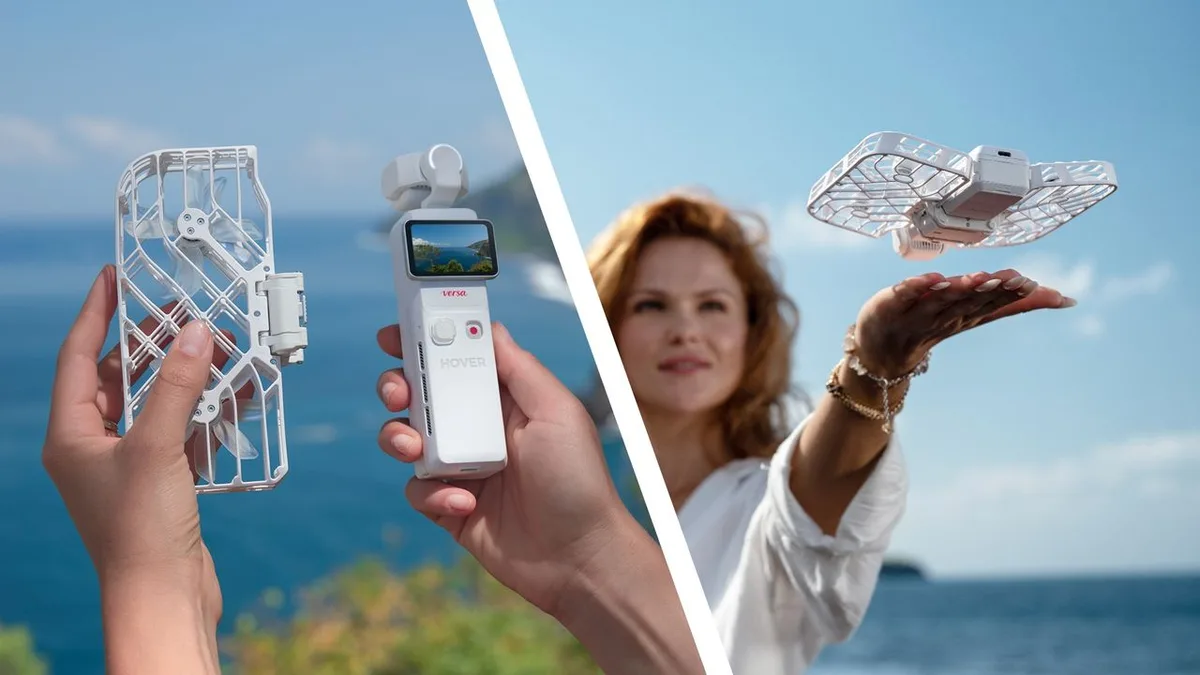
Versa is the world's first 2-in-1 pocket gimbal camera and drone It launched on Indiegogo on August 18, with prices starting at $499 HoverAir says Versa has FCC approval, so should be available in the US DJI dominates the drone space, leaving precious little room for others.
However, HoverAir has repeatedly given the market a crack, innovating in gaps left by the leading drone maker.
First we had the X1 , the first self-flying drone that took off from the palm of your hand for easy aerial 4K selfies, which was followed up by HoverAir's X1 Pro with beefier 8K video.
DJI acted swiftly, answering with the Neo (and consequently Neo 2 ), which cost much less than HoverAir's, too.
Then there was HoverAir's Aqua , the world's first waterproof drone, which remains unique today.
Now, we have the new Versa — the first 2-in-1 pocket gimbal camera and drone — making a trio of firsts.
Versa looks like HoverAir's previous X1 series efforts, only its wings can be removed in a simple motion, leaving the drone body as a DJI Pocket-like pocket gimbal camera.
Drones and gimbal cameras are two popular camera categories, yet Versa can be both of those things.
It seems like an obvious move when you think about it.
After all, both camera types feature a camera unit supported with a 3-axis gimbal.
Can the Versa genuinely serve both jobs? We will find out very soon once our Versa review sample lands.
HoverAir has, it seems, another advantage over DJI, saying it's new Versa has FCC certification.
This means Versa can go on sale in the US, meanwhile DJI is still banned from selling its new products in the US.
There could be light at the end of the US ban tunnel for DJI, mind you, with recent news that a judge is set to review evidence that has categorized DJI as a Chinese military company .
5News aggregated this summary from the outlet’s public feed. The full article, with all the context, is on www.techradar.com — the content belongs to TechRadar.