I hike for a living, and these are the 5 best GPS watches I've tested on real mountains — including Everest — from Garmin, Suunto, Coros & more
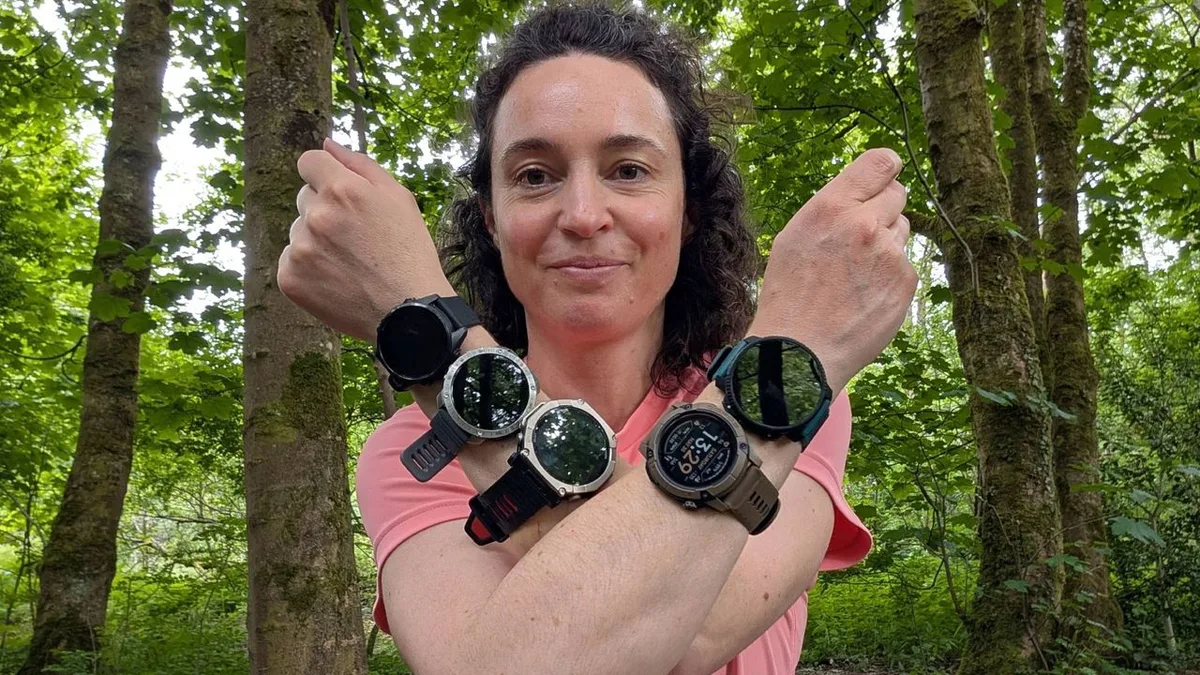
Hiking is all about getting away from screens and into the healing embrace of nature, sure, but over the past few years I’ve often embraced the help of a GPS watch when I hit the trail.
These crafty devices have banished my trusty map and compass into the deepest recesses of my hiking backpack, only to be pulled out in dire circumstances.
Their offline maps and handy turn-by-turn navigation have me blowing past every trail junction without slowing down, and never again do I have to wonder how far I’ve walked or how much ground I still have to cover.
Not every smartwatch feature matters for hiking – I personally don’t need a reminder every time I receive a text, and training tools like Race Predictor on the best Garmin watches are only depressing, as handy as they are for trail runners – but a watch with offline maps, a great battery life and a flashlight is like gold when I’m taking the long road.
Over the last few years, I’ve tested dozens of GPS watches on trails from the Highlands to the Himalayas to find out which are best for trekking adventures.
Best premium GPS watch: Garmin Fenix 8 (Image credit: Future / Julia Clarke) Maps: Full color topo maps preloaded Torch: LED Display: AMOLED Materials: Titanium bezel, Power Sapphire lens, fibre-reinforced polymer case Battery life: Up to 28 hours in GPS mode The fully-featured Garmin Fenix 8 is one of the absolute best GPS watches that money can buy, it’s true.
But don’t think its inclusion here is merely a lazy catch-all – I wore this watch all the way to Everest Base Camp and back to find out whether or not it really has the chops for hiking.
Suffice to say, it’s nearly perfect for intrepid adventures.
For my 11-day trek, I played around with both Mountaineering mode, which gave me precise altitude readings that were really helpful as we climbed up to 5,364m, and Rucking mode, which allowed me to input my exact pack weight for more accurate fitness tracking and calorie counting.
In the Nepalese teahouses, the LED torch was ideal for midnight trips to the loo, and on a pre-dawn hike up Kala Patthar to watch the sun rise over Everest, the red light function proved more useful than my super bright headtorch.
The Fenix 8 comes with full colour maps already preloaded, and with 32GB of storage, it holds up to 100 GPX routes, far more than I’d ever need.
I trekked with a guide in the Himalayas, so I didn’t need to download the route, but a few months later, I wore it for a five-day hike of the Cumbria Way, and the route was lightning-quick to render and meant I barely had to break my stride if I came across an unmarked trail junction.
The only gripe I can find is the battery life, which is more than suitable for regular day hikes, but lacks a little on multi-day treks.
5News aggregated this summary from the outlet’s public feed. The full article, with all the context, is on www.techradar.com — the content belongs to TechRadar.