Is the Trump Treasury panicking over the level of US debt?
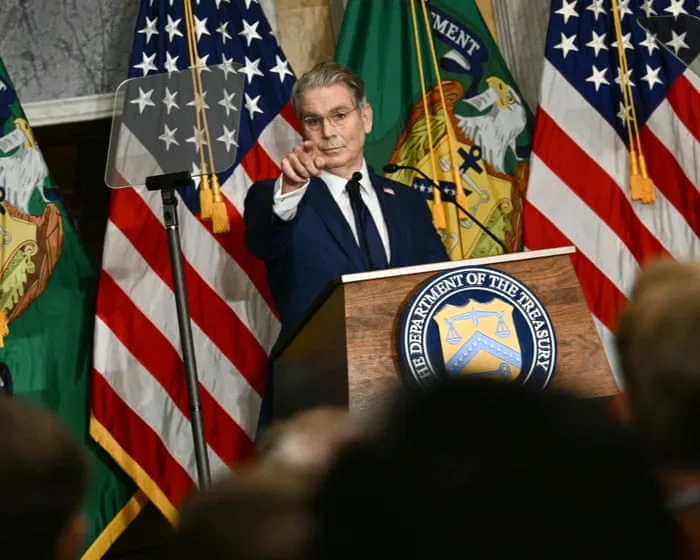
With the federal deficit near 6% of GDP and the national debt over $40tn, America’s fiscal position looks increasingly precarious
A re we seeing the first signs of panic in Donald Trump’s Treasury? The US is by far the world’s biggest debtor, and the steady rise in global long-term interest rates – which I have long argued was inevitable – is starting to cause real pain.
Until now, the Treasury secretary, Scott Bessent, has dismissed concerns about US debt, which recently surpassed $40tn , as a big nothingburger. Growth, in his telling, will be so spectacular the US will easily be able to meet its interest obligations without any significant tax rises or spending cuts, while the rest of the world will happily keep feeding it money. But if Bessent really believes that, why is he trying to strong-arm the bond market by fiddling with the maturity structure of government debt?
The obvious first move, and the one the markets are looking for, is to address the underlying problem by reining in America’s massive federal deficit, which is now running at roughly 6% of GDP . Bessent has repeatedly assured markets that the Trump administration’s voracious borrowing is temporary, and that AI-led growth will generate an abundance of tax revenues that will soon bring the deficit down to a somewhat more manageable 3% of GDP.
That could happen, but there are many reasons to think that pain-free budget consolidation is wishful thinking, not least because AI profits are likely to prove much harder to tax than labour income. In the near term, the costs of supporting an ageing population, paying for what appears to be an inevitable surge in military spending and caving to intense populist pressure for more public spending will probably rise at least as fast as revenues.
Making matters worse, the premium on long-term US treasuries – a major part of the dollar’s “exorbitant privilege” as the global reserve currency – has largely evaporated. US debt no longer trades as a special safe asset relative to that of other advanced economies. The value of dollar dominance is thus fading even under the best of circumstances. And if budget pressures eventually trigger a crisis, the result could be a rapid loss of the dollar’s global market share that might otherwise take decades .
What, then, should the US Treasury do? The textbook answer, as Bessent well knows, is to take steps toward major budget consolidation, and not the blundering, heavy-handed random cuts that Elon Musk and his Doge acolytes pursued in 2025. Bessent’s problem is that his boss, Trump, understands that American taxpayers are not prepared for any kind of genuine austerity.
That is why Bessent’s turn toward bond buyback gimmicks is worrying. In effect, Bessent is promising to take long-term debt out of the system and replace it with short-term debt, much as the Federal Reserve does when it engages in quantitative easing.
5News aggregated this summary from the outlet’s public feed. The full article, with all the context, is on www.theguardian.com — the content belongs to The Guardian Business.