Sir Chris Hoy: Campaigning for cancer screening should not be down to me
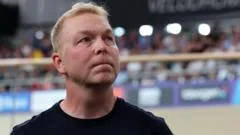
Sir Chris Hoy believes the onus to encourage men to get tested for prostate cancer should not just be on high-profile individuals like him.
Hoy told BBC Scotland he felt privileged to have the public platform to spread awareness and would continue to do so even if there was a national screening system in place.
But he said: "It shouldn't just be down to high-profile individuals like Jeremy Clarkson or myself or any number of men who've been in a similar situation.
"There should be a more systematic and proactive approach to let men know about their own risk."
Sir Chris was diagnosed with stage 4 prostate cancer when was 47. . He turned 50 in March.
He told BBC Scotland: "I turned 50 recently and I got a letter through the post with a bowel screening test.
"I understand the PSA test (a blood test that can help detect prostate cancer) isn't perfect, you know you can get results - not false positives, but it can be that men can be treated when they maybe didn't need to be treated.
"But actually, I think that's not a diagnosis issue, that's a treatment issue, that's a decision for the doctors to make.
Hoy said 10,000 men a year in the UK find out too late that they have prostate cancer.
He said there should be some kind of formal process to at least make men take responsibility and ownership and to understand their personal risk.
"In the short term, until something more proactive happens you've got to take it on your own shoulders," he said.
"It's not what you want to think about and it's always the thing you push down the list of priorities. You forget about it because life's busy."
The six-time Olympic gold medallist, was speaking ahead of his "'Tour De 4" charity cycle, the event he founded after his diagnosis which, in his view, is "doing something positive from a very difficult situation."
"The aim is to try and change perceptions of what living with stage 4 cancer can mean," he said.
5News aggregated this summary from the outlet’s public feed. The full article, with all the context, is on www.bbc.co.uk — the content belongs to BBC News (Top Stories).