Russia says it will start selling its 'suicide drone' to foreign nations — but won't name them
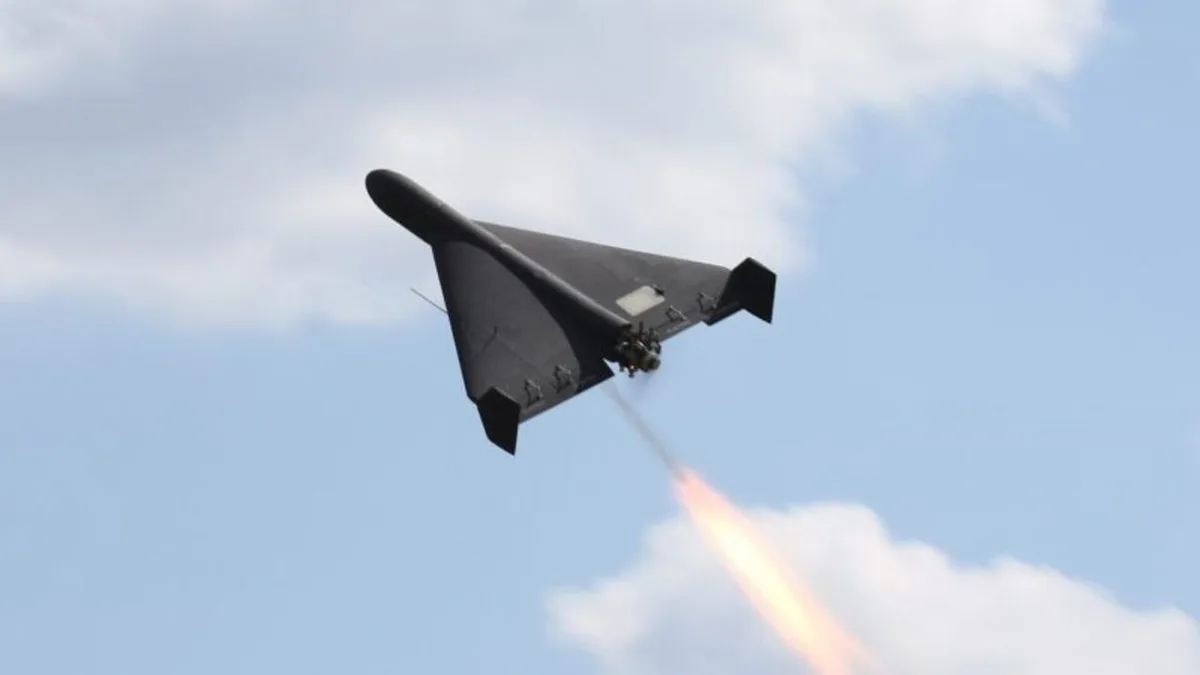
Russia is offering the Garpia-A1E to foreign military customers The drone can reportedly travel up to 1,000 kilometres Garpia-A1E carries over 50kg payload and endures for over six hours Moscow has begun marketing a long-range loitering munition built by a state defense manufacturer to foreign militaries.
The weapon, known as the Garpia-A1E, has drawn interest from buyers abroad following a series of live demonstrations.
Officials confirmed the export plan, but declined to name which countries have expressed interest so far.
A weapon built for distance Unlike drones designed for repeated missions, this class of weapon flies toward its programmed coordinates and detonates on arrival, destroying itself in the process — a one-way flight profile that has earned the informal label "suicide drone." The aircraft spans 3.4 meters in length, carries a takeoff weight of 250 kilograms, and stretches 3 meters across its wings.
Engineers built the airframe around an existing gasoline-powered munition design, relying on a tailless layout and a rear-mounted propeller to strike fixed coordinates set before launch.
It tops out near 170 kilometers per hour, can remain airborne for more than six hours, and operates at altitudes ranging from 50 to 2,500 meters.
"Today, the Garpia-A1E is the only loitering munition on the global market with a range of up to 1,000 kilometers," said Alexander Mikheev, general director of Rosoboronexport.
The payload capacity exceeds 50 kilograms, and the system's accuracy keeps errors within four meters of the intended point of impact.
Prospective buyers overseas have already shown interest following a round of live testing, the director added.
Rosoboronexport remains open to negotiating direct sales agreements, along with arrangements to manufacture the drone inside countries considered friendly toward Moscow.
Meanwhile, the drone's maker, Almaz-Antey, has expanded output at its production facilities, supporting the defense sector's ability to fulfill international orders on competitive timelines.
Domestic orders come first Any commercial arrangement involving Russian military hardware must account for existing domestic commitments before new contracts move forward.
However, it seems Russia’s domestic needs will not be a problem because the company has since expanded production.
Almaz-Antey has now reached a production capacity sufficient to meet foreign orders within competitive delivery windows.
5News aggregated this summary from the outlet’s public feed. The full article, with all the context, is on www.techradar.com — the content belongs to TechRadar.