Newsom faces high-stakes California fight over who pays for wildfire damage
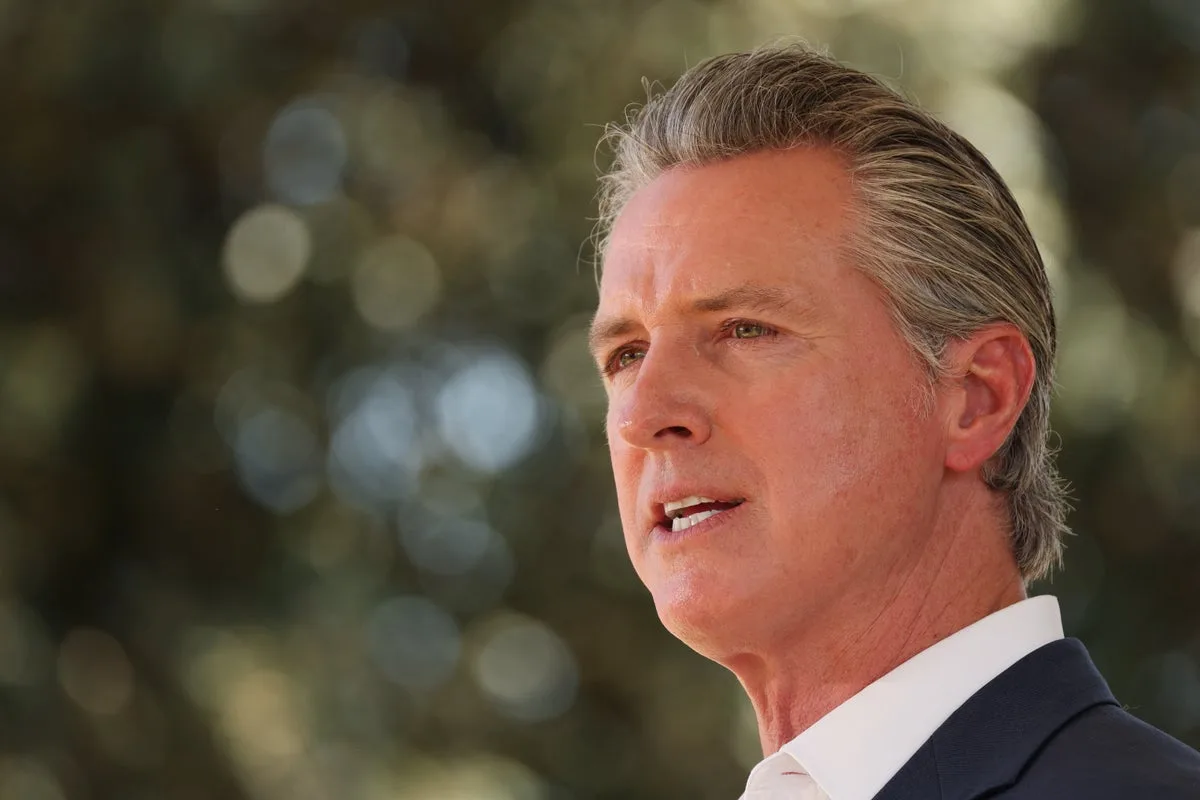
A single question has framed the start and culmination of California Gov. Gavin Newsom's nearly eight years in office: who ought to pay for devastation caused when utility equipment triggers a wildfire?
Just two days after Newsom won the governorship in 2018, the most destructive wildfire in the state's history erupted in Northern California, killing 85 people and destroying over 18,000 buildings. Investigators traced the cause to Pacific Gas & Electric equipment. Burdened by tens of billions in liability, the massive power provider filed for bankruptcy weeks after Newsom was inaugurated.
Newsom later signed legislation creating a $21 billion fund, financed by utility shareholders and ratepayers, helping power companies cover future damages if safety standards are met
Now, as the final legislative session of his governorship ends, Newsom is trying to broker a deal with lawmakers aimed at further shielding utilities from financial trouble if their equipment sparks a wildfire. His push comes as another major utility, Southern California Edison, faces claims from the state's second-most destructive blaze, a 2025 fire that killed 19 people outside of Los Angeles. Investigators ruled this month that it was sparked by one of the company’s transmission towers.
Newsom's plan could limit the amount electric and gas companies have to pay victims and attorneys. One of the goals is to stabilize the state's electricity rates, which are among the highest in the nation and have continued to climb in recent years. Utilities have raised rates to pay for wildfire prevention and recovery as climate change has made the blazes more intense and frequent. Six of the state’s 10 most destructive wildfires have been caused by utility equipment.
Newsom says the state needs to act quickly because he expects the wildfire fund to run out soon. His plan would require survivors to get paid by utilities sooner.
“Status quo is not going to work,” Newsom recently told reporters. “It’s not going to work for victims, who consistently are last in line. And that’s at the core of this reform."
But some of those victims are pushing back. They've said Newsom's plan prioritizes utilities over the needs of fire survivors. Meanwhile, insurance companies are concerned they would foot more of the bill for property damage. A coalition including the state's major utilities — PG&E, Southern California Edison, and San Diego Gas & Electric — has been urging lawmakers to pass the plan. The last-minute legislative battle could help shape Newsom's legacy as he considers a run for president in 2028.
Under California law, utilities have to pay damages for fires ignited by their equipment, even if a judge doesn't find them negligent. Home insurers that pay for policyholders' rebuilding expenses can try to get reimbursed by utilities.
Newsom's plan could change that by making insurance companies cover more of the cost of property damage. The proposal would also require utility CEOs to forfeit bonuses if their company sparks a wildfire resulting in more than $1 billion worth of damage.
5News aggregated this summary from the outlet’s public feed. The full article, with all the context, is on www.independent.co.uk — the content belongs to The Independent World.