The Apple Upgrade program is great for consumers and Apple, but bad for carriers like Verizon and AT&T — here's why
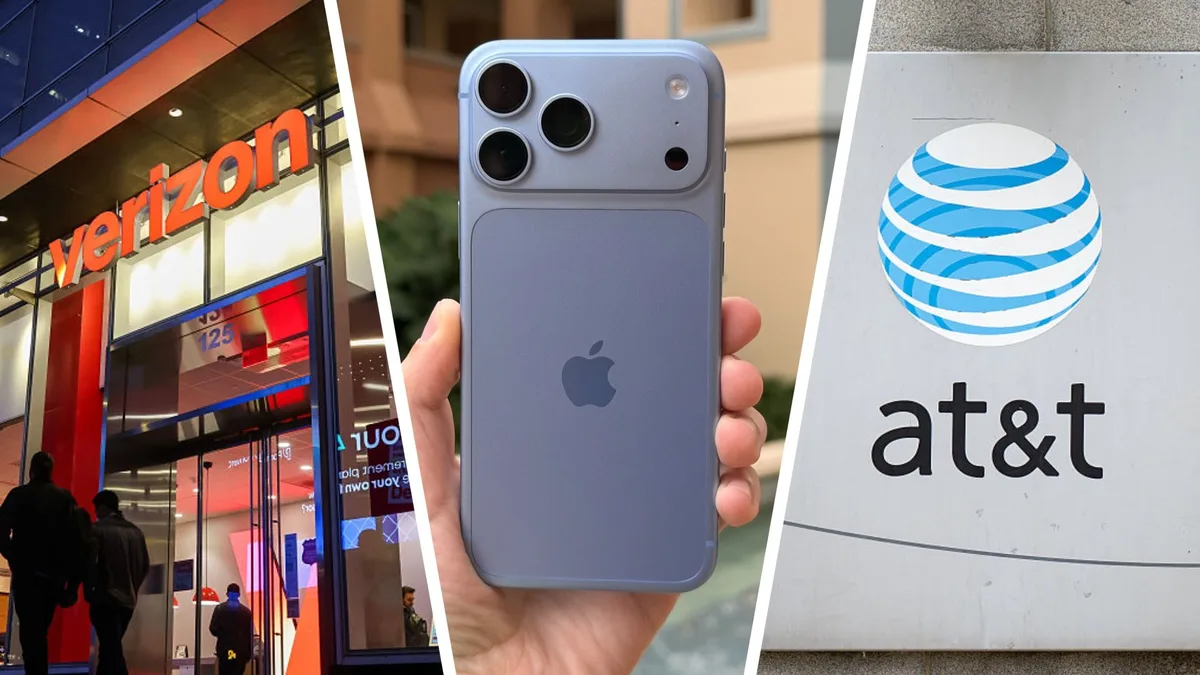
Where were you when the first iPhone went on sale back in 2007? I remember clearly that I was working for Phones4U — a third-party phone reseller in the UK — and the iPhone launch completely decimated the business, as suddenly Phones4U wasn't a reseller of the most popular phone on the market.
The same existential threat applied to all carriers except AT&T and O2, which had exclusive launch rights to the iPhone in the US and UK, respectively.
Fast-forward 19 years, and Apple has repeatedly proven that the iPhone's popularity gives it considerable power over its carrier partners — customers are no longer loyal to the carrier providing the mobile service, but to the brand behind their favorite phone.
Apple's newest commercial venture, the Apple Upgrade program — which was announced earlier this year and is, at the time of writing, still only available in the US — is the latest dagger to the heart of major MNOs (Mobile Network Operators).
But despite being a fantastic deal for customers and Apple itself (and make no mistake: I believe it's a net positive move), the Apple Upgrade program could yet prove a double-edged sword for the mobile industry as a whole.
Let me explain.
Carriers used to have ALL the power...
The Motorola Droid Ultra is an example of a carrier-branded smartphone To understand what the Apple Upgrade program is, you have to first understand how the industry worked before the original iPhone.
To say that Apple has irrevocably changed the carrier business model on numerous occasions may seem like hyperbole, but it’s hard to overstate the company's lasting effect.
Before the original iPhone, carriers were integral to a phone's success.
Carriers controlled which phones were sold in stores, which phones received the bigger marketing pushes, and which were “certified” to work with that carrier.
This meant that all phone makers had to focus more on acquiescing to carrier requests — including shipping customized devices with several preloaded apps and even carrier-specific branding — than meeting their customers' needs.
In many ways, carriers were the customer rather than the end-user itself, and they proved even more integral, as each carrier also controlled when software updates were released to its phones.
I remember clearly how customers would blame the phone maker for software-related shortcomings rather than the carrier, even if the software update was delayed by the carrier’s own internal testing.
5News aggregated this summary from the outlet’s public feed. The full article, with all the context, is on www.techradar.com — the content belongs to TechRadar.