I'm a pro photographer — here's how I'm going to capture the extraordinary lunar eclipse blood moon on August 27-28
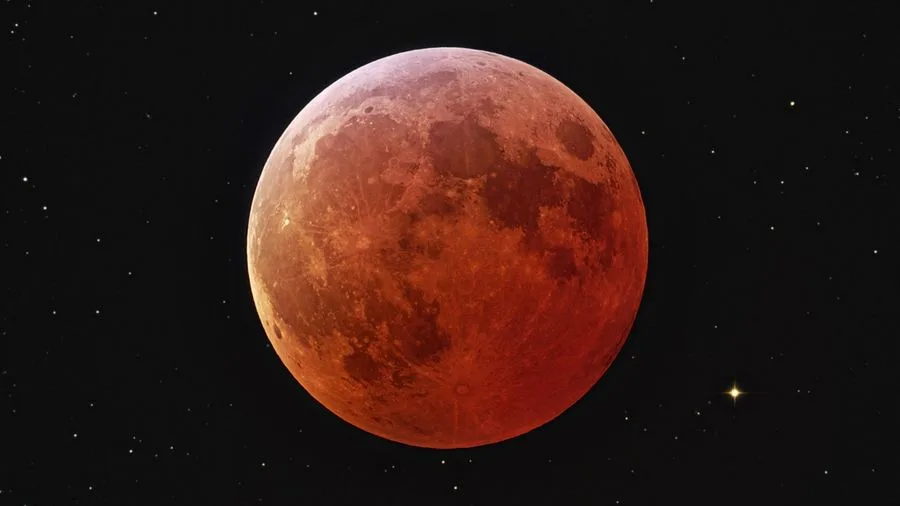
August's celestial wonders aren't done yet.
Following the stunning total solar eclipse and the peak of the Perseid meteor shower a couple of weeks ago, we're set for another extraordinary show this week — a lunar eclipse.
On August 27-28, night sky observers in North America, South America, Europe, Africa and Western Asia are in for a treat, with a 96.2% lunar eclipse and 'blood moon' occurring.
It's not a total lunar eclipse — the next one of those takes place on December 31, 2028 (yes, new year's eve!) But for many, this week's eclipse will be the best until then, so it's well worth staying up late/getting up early for.
Here's exactly when and where the lunar eclipse can be seen — and my pro tips for capturing it with your camera of choice.
When and where to see the August lunar eclipse The lunar eclipse can be seen on the night side of Earth, which on August 27-28 means that large portions of North America and South America, plus the western half of Europe and Africa, will enjoy the best of the eclipse — its maximum.
Further afield, viewers in eastern Europe and western parts of Asia will catch a glimpse of the eclipse — the penumbral and partial phase, but not the maximum 96.2% — while Australia won't see it at all.
In total, 44.4% of the global population can catch a glimpse.
A large portion of the US is ideally placed to see the lunar eclipse, including Washington DC and New York, because it reaches its maximum at 12:12am ET time, and the moon will be relatively high in the night sky.
In Europe, the 'maximum' phase of the lunar eclipse occurs an hour before moonset/ sunrise Credit: ESO/F.
Char (Image credit: ESO/F.
Char) Across Europe, the maximum eclipse occurs at 6:12am (CEST), which is 5:12am BST.
In cities including London, Paris and Madrid, the maximum eclipse is around one hour prior to sunrise and as the moon sets, meaning the moon will be very low in the sky — offering the prospect of superb photography opportunities.
Those timings are for the maximum eclipse, but the 'penumbral' eclipse begins almost three hours before, and ends almost three hours after.
5News aggregated this summary from the outlet’s public feed. The full article, with all the context, is on www.techradar.com — the content belongs to TechRadar.