Google smacks forehead, realizes $899+ thin-and-lights were what it was missing
Google is trying once again to escape the Chromebook reputation for cheap, chintzy hardware and compromised computing. $899 for a glorified web terminal isn’t exactly the easiest sell, but that’s not stopping the search and advertising giant from trying.
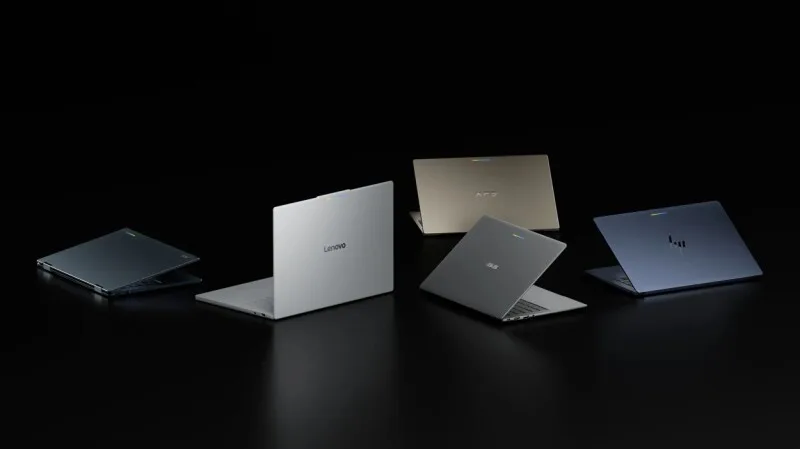
On Monday, Google unveiled five new Googlebooks in collaboration with Dell, HP, Lenovo, Acer, and Asus.
Googlebook, if you aren't familiar, is what Google describes as a new category of laptops, rather than a Chromebook or a rebranding of one.
With that said, some familiar software limitations remain.
A major emphasis has, however, been placed on premium materials and components like aluminum or magnesium alloys, carbon fiber, haptic trackpads, high-resolution touchscreens, and speedy high-end processors.
With prices starting at $899, Google is clearly trying to woo would-be Apple MacBook Neo buyers, with similarly premium build quality, while sweetening the deal with more memory and compute.
Under the hood, the initial machines offer a choice of Intel Core Ultra 5 or Qualcomm Snapdragon X Elite processors, paired with 16 GB of RAM and 512 GB of storage.
MediaTek is also on tap to supply SoCs for the systems.
While best known for its budget-friendly mobile processors, its notebook-class parts, including Nvidia’s GB10-based RTX Spark APU, have proven quite potent.
But while Google’s launch announcement touts “a baseline of 16GB” of memory, that actually appears to be the only config available for pre-order.
It’s also worth noting that the $899 starting price only applies to one Acer model, with other systems reaching as high as $1,299 — putting them in MacBook Air territory.
It’s possible additional SKUs will eventually offer higher memory capacity and storage, but with memory prices already at a record high, the jump to 32 GB of DDR5 and 1 TB of storage would likely push these devices well north of $1,500.
Earlier this year, Omdia analysts had predicted a shift to higher margin devices, which have more headroom to absorb skyrocketing memory prices.
Despite this, ChromeOS device sales were still predicted to shrink 27.6 percent in 2026.
5News aggregated this summary from the outlet’s public feed. The full article, with all the context, is on www.theregister.com — the content belongs to The Register.