Fears for communities near the great Colorado River as drought means future is uncertain
Located on the outskirts of Phoenix, a small town hugely reliant on the Colorado River has restricted development, reopened disused wells and negotiated new water agreements.
Yet Cave Creek Mayor Robert Morris fears these efforts will prove insufficient to sustain the desert enclave of roughly 5,000 residents long into the future. Furthermore, a recent federal initiative intended to tackle the worsening crisis across the river basin will offer no help.
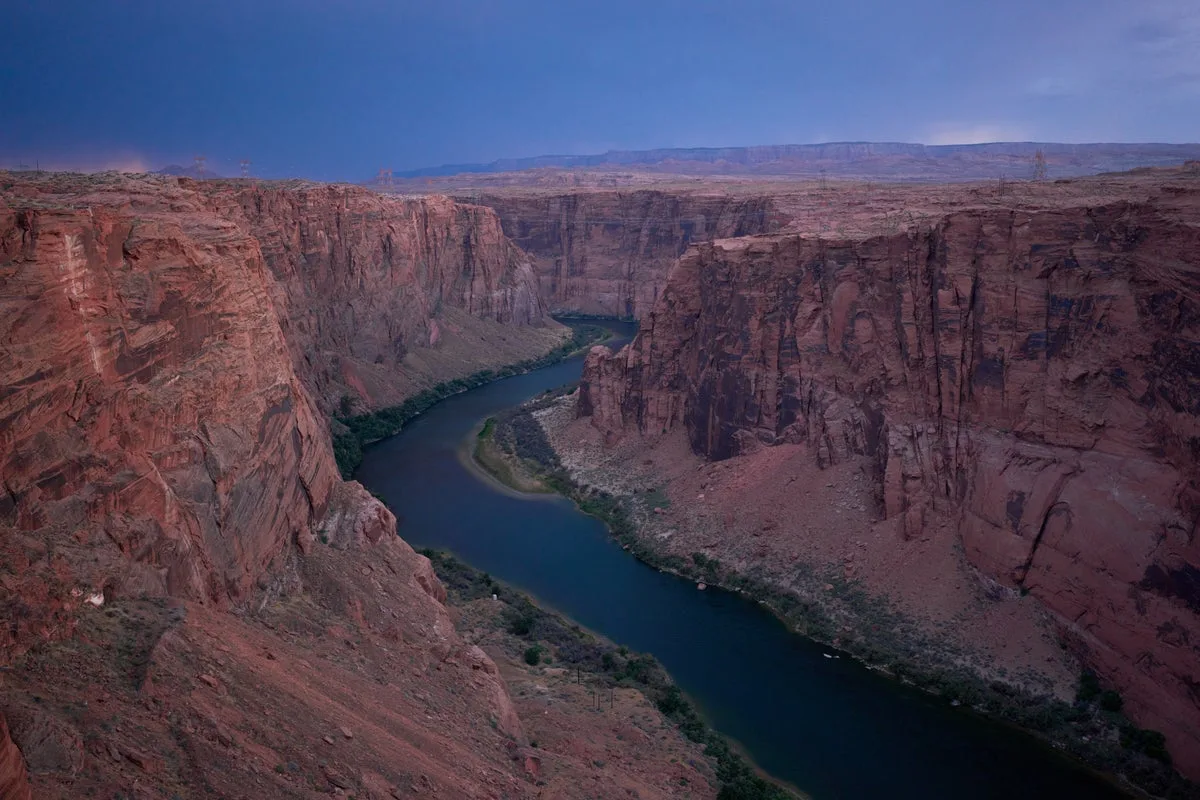
Cave Creek draws almost all its supply from the river, which provides water to 40 million people across the US West but has been shrinking due to climate change, demand and excessive use. The town was compelled to reduce consumption this year and stands to lose even more under the new federal proposal.
“You can see it coming, but you can't get out of the way and you don't know what the damage is going to be,” he said.
The uncertainty stretches across seven U.S. states, tribal nations and Mexico. Farmers are deciding which crops are worth the investment. Phoenix could lose some municipal and industrial water for the first time and turn to backup supplies. And residents could face even more costly water.
Nevada raised the stakes this week by suing the Interior Department and the U.S. Bureau of Reclamation, saying basic needs in the Las Vegas region will go unmet if the area has to absorb planned reductions of up to 70% of its Colorado River water in the next decade.
“The uncertainty is going to continue to build in the wrong direction,” said Tom Buschatzke, director of the Arizona Department of Water Resources.
In the U.S. West, water is stored primarily in reservoirs, aquifers and snowpacks. But a record snow drought means there's far less water to recharge those sources.
The two largest reservoirs in the country serve as barometers of health for the Colorado River system: Lake Mead and Lake Powell. Both hit record lows this month.
Eight other reservoirs operated by the Bureau of Reclamation recently recorded the lowest levels in at least the last 30 years. Among them is Elephant Butte Lake in New Mexico that's critical for supplying water for crops in southern New Mexico, Texas and Mexico. The Green Mountain Reservoir serves the western part of Colorado, and the Guernsey Reservoir in Wyoming funnels water to farmers in the eastern part of the state and western Nebraska.
Under the Bureau of Reclamation’s plan, California, Nevada and Arizona will collectively reduce water use by 1.25 million acre-feet (about 1.54 billion cubic meters) — enough to fill over 600,000 Olympic-sized swimming pools — annually in the next two years, with the possibility of larger cuts depending on conditions. Colorado, Utah, Wyoming and New Mexico are not required to make cuts for now but could voluntarily reduce water.
While El Niño could bring intense moisture to the northern Rockies and the Southwest in the coming months, it won't erase decades of drought.
“Drought is a slow-moving phenomena and it can take some time to come into it and also come out of it,” said David Mocko, senior research scientist who authored a recent U.S.
5News aggregated this summary from the outlet’s public feed. The full article, with all the context, is on www.independent.co.uk — the content belongs to The Independent World.