I’m a psychoanalyst. Social media is damaging children’s inner lives in ways we don’t fully understand | Robin Kirman
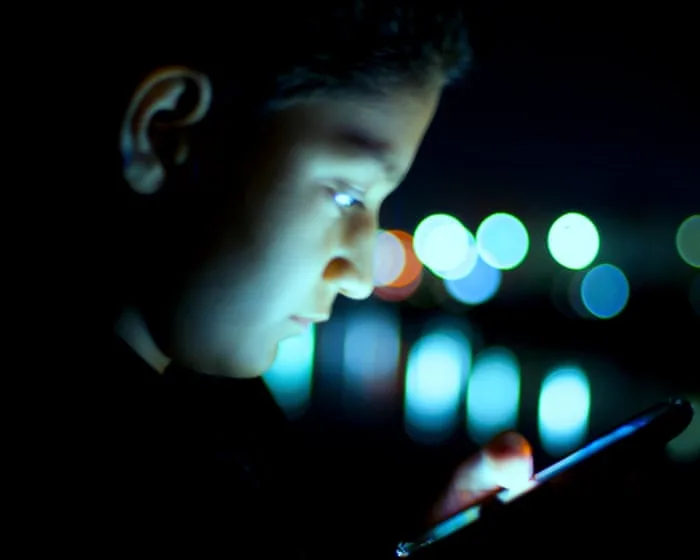
Discussion has focused on behavioral outcomes. But Meta’s settlement shines a light on damage to young people’s emerging desires and identities
D uring the landmark social media addiction trial that led to Meta’s recent $17.1bn settlement , a therapist testified that she had once asked the plaintiff – a young woman named Kaley, who had been using social media since she was six – what her miracle day would look like: what she wished to come true, if anything were possible. Kaley replied that she would be prettier.
As a psychoanalyst, I find that exchange devastating in a particular way. A miracle day is an invitation to engage with the full range of human desire: with what one might accomplish or experience, whom one might encounter or love. Kaley’s answer contracted the world and all its possibility into a single preoccupation with her own image.
Kaley’s testimony echoes what I hear from many of my younger patients: teens who are often out of touch with what they want from life, not temporarily undecided, but fundamentally unable to locate a sense of what matters to them. Most also feel consumed by a preoccupation with how they appear – with their bodies, their standing in others’ eyes – that is brutal and unrelenting. These struggles are often accompanied by a cluster of symptoms that have come to define the youth mental health crisis: anxiety, depression, eating disorders, addiction, self-harm, social withdrawal.
Researchers and clinicians have linked these symptoms to heavy social media use, but the discussion has been largely confined to documented behavioral outcomes. What the public conversation has not sufficiently addressed is what social media addiction does to young people’s inner lives, and specifically, the damage done to their emerging desires and identities.
The philosopher Harry Frankfurt argued that what you genuinely care about is, in some fundamental sense, what you are. DW Winnicott, a British pediatrician turned psychoanalyst, arrived at a similar insight through the study of childhood development: desire and identity are inseparable. For Winnicott, the capacity for genuine desire is not innate but developed, and it develops only when a child is free to follow impulses that arise from within. Winnicott was writing about early childhood, but his account, I’d argue, also applies to the years that follow. The child who climbs a fence to see what’s on the other side, who starts a game in the street and finds others drawn in, who keeps pulling books off the shelf until she finds one that addresses her latest curiosity – she is learning that her desires matter, that they can direct her and shape her experience of the world. She discovers not only what she wants, but who she is : her true self, in Winnicott’s terms.
Social media systematically undermines that process. The trial’s expert witnesses explained how these platforms function at the neurological level: they hijack the brain’s dopamine reward system, holding it in a state of chronic activation.
5News aggregated this summary from the outlet’s public feed. The full article, with all the context, is on www.theguardian.com — the content belongs to The Guardian Society Health.