The year-old Nikon Z5 II is still streets ahead of Canon's new EOS R8 Mark II — and it's the entry-level full-frame camera I’d buy
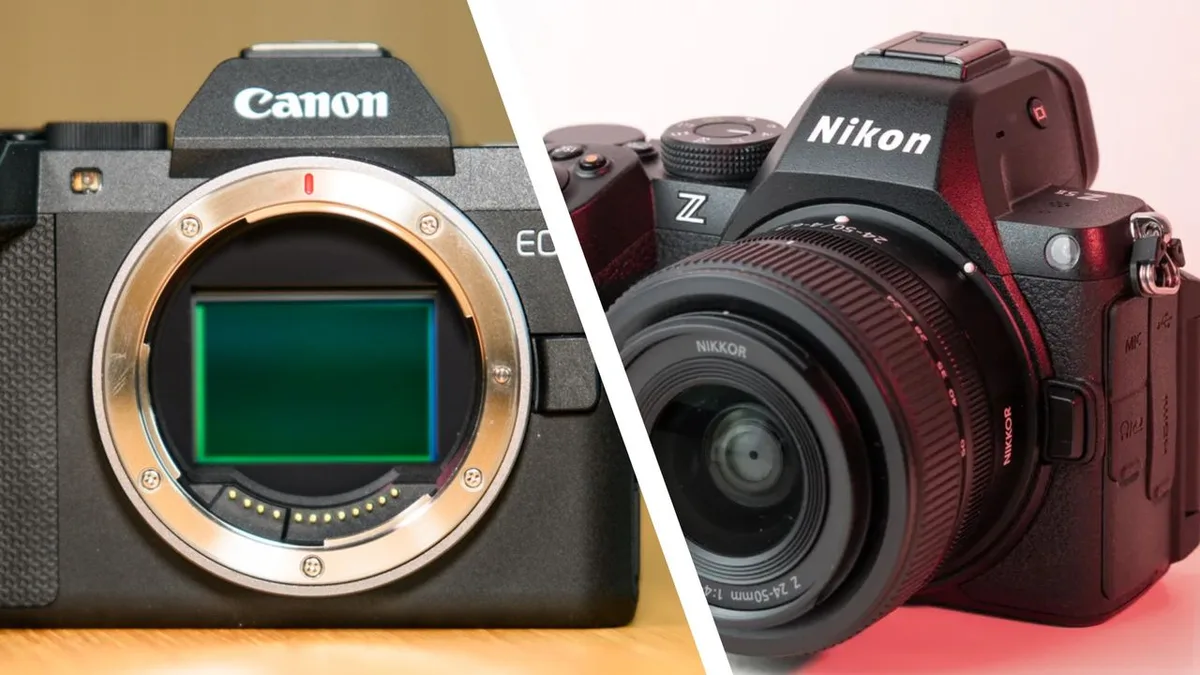
Canon EOS R8 Mark II Nikon Z5 II Canon's EOS R8 Mark II is here, with a fresh new look that's inspired by the world's leading camera manufacturer's heritage, and finished off with a "modern twist".
The resemblance to Canon's analog SLRs such as the T80 or AE-1 is faint, but in any case the new model is certainly a decent upgrade of the EOS R8, adding image stabilization, a multi-controller, and various performance and design improvements.
When I pored over the specs and pricing of the EOS R8 Mark II during my hands-on , however, a surprising reality came into sharp focus: Nikon's year-and-a-bit-old Z5 II remains highly competitive and it costs less than Canon's latest entry-level full-frame mirrorless model.
If you're considering your first full-frame camera and are not tied to Canon or another system, you should totally read on to find out more about the new EOS R8 Mark II, and how it fares against our Camera of the Year 2025 winner , the Nikon Z5 II.
1.
Sensor Both feature a 24MP full-frame sensor Both sensors are equipped with image stabilization, rated up to 7.5EV This section is going to be straightforward: both cameras have a full-frame 24MP sensor that's equipped with image stabilization (IBIS) rated up to 7.5EV.
Besides nuances in how each camera handles color and noise, and personal preferences, the image quality will be pretty similar.
Having said that, I've historically found Canon's image stabilization to perform better than Nikon's.
Sensor winner: Tie Tim Coleman Future / Alex Whitelock 2.
Video Both shoot 4K video up to 60fps, but the Z5 II has a 1.5x crop Both shoot 4K 30fps with 10-bit color depth from the sensor's full width, the Z5 II shoots 12-bit RAW 1080p slow motion recording up to 180fps (EOS R8 Mark II) and 120fps (Nikon Z5 II) Color profiles for video; new 'filmtones' for EOS R8 II, well-regarded RED profiles for Z5 II There's much more to unpack and compare regarding each camera's video features.
Both can shoot 4K video at 30fps with 4:2:2 10-bit color depth from the full width of the sensor, and up to 60fps at this resolution, although at this frame rate there's a 1.5x crop in the Z5 II.
The Nikon camera, however, is the only one that can shoot 12-bit internal RAW video, which certainly gives it the quality edge for users who want greater tonal depth and editing latitude, and who don't mind the larger file sizes.
Slow motion recording is also possible in 1080p, but again the EOS R8 Mark II has the frame rates edge — it can shoot 6x slow motion (180fps) to the Z5 II's 4x slow motion (120fps).
There's no shortage of color profiles for each camera, either.
5News aggregated this summary from the outlet’s public feed. The full article, with all the context, is on www.techradar.com — the content belongs to TechRadar.