Pre-capture is the best wildlife photography trick you’re not using — here’s how I use the handy tool and which Canon, Nikon and Sony cameras support it
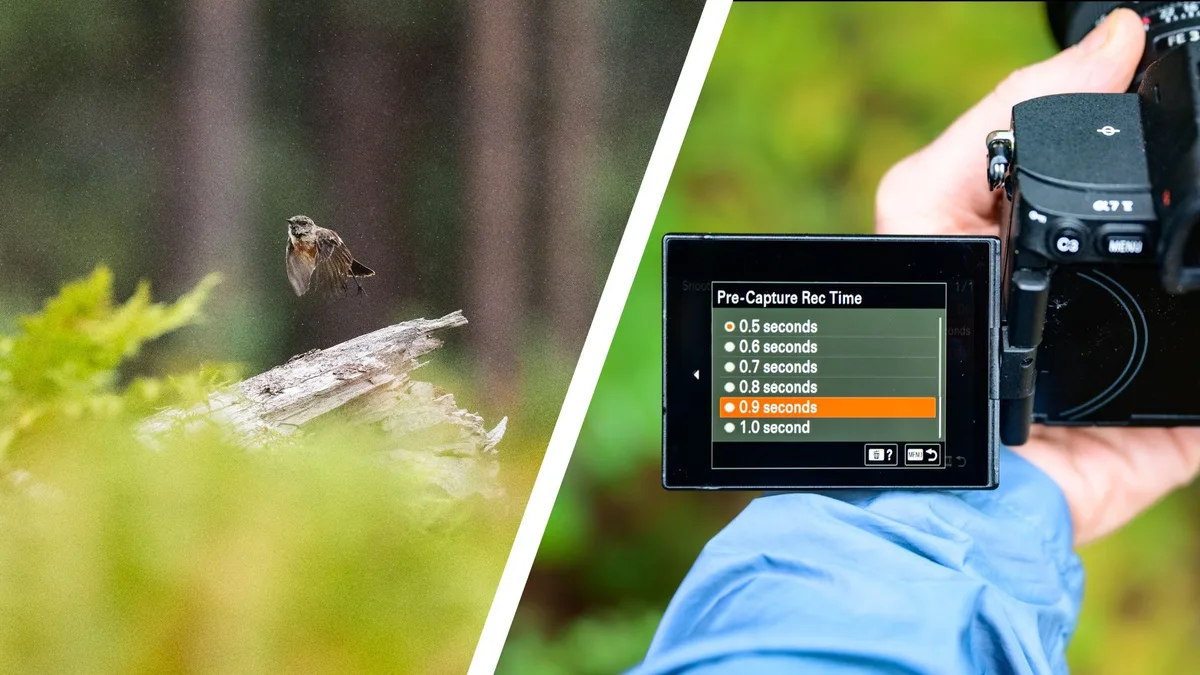
If you followed the release of the new Canon EOS R8 Mark II, you might be wondering what the feature pre-continuous shooting is, otherwise known as pre-capture (Sony and Nikon), Pro Capture (OM System), Pre-Burst (Panasonic) or Pre-shot ES (Fujifilm).
The feature has been around for a while now having been introduced by OM System (Olympus), and it’s slowly worked its way across brands and into affordable models, including the R8 II, Sony A7 V and Nikon Z5 II.
I'm here to explain pre-capture, and show you the benefit of this feature with images I wouldn’t have otherwise been able to capture without it.
Let’s dive in.
What is pre-capture and how does it work? Picture this — you’ve got your camera fixed on a subject, poised for the action to happen; athletes on the 100m start line, a kingfisher on a branch that could take flight at any moment, a potential goal in a soccer match.
Sometimes your reactions aren’t up to speed to capture the key moment, and it's gone before your finger has pressed the shutter button.
It’s exactly these scenarios that pre-capture is designed for, and it's the feature that helped me get the images of birds in flight, where previously I’d have missed the moment or simply settled for ones of them perched on branches.
Pre-capture gives you up to a 1 second head start (depending on the model) before the shutter is pressed, continually shooting (to a temporary buffer) before you press the shutter button, at which point the images shot in the specified time before the shutter button was fully pressed are recorded retrospectively.
What would've happened without pre capture (Image credit: Tim Coleman) With pre-capture on, it's typically initiated by half pressing the shutter button (or fully pressing an assignable button, such as the autofocus button), as is the case with the Sony A7 V I used to take the pictures in this feature.
The Canon EOS R8 Mark II, for example, can shoot up to 40fps and offers up to 0.5 second pre-capture, meaning you can retrospectively record a 20 photo sequence in the half second before you press the shutter button.
The Sony A7 V can shoot up to 30fps with up to 1 second pre-capture, so that’s up to 15 images. (Image credit: Tim Coleman) How to use pre-capture effectively I recently got into bird photography and it didn’t take me long to bag some beautiful photos of the varied birdlife in my local nature reserve and wetland, using some superb review gear — including the Sony 400-800mm F6.3-8 super telephoto zoom lens .
As enjoyable as this hobby is (and it really is), soon enough I was considering how I could mix up the kind of photos I was making, besides stationary birds on branches.
Pre-capture came to mind.
5News aggregated this summary from the outlet’s public feed. The full article, with all the context, is on www.techradar.com — the content belongs to TechRadar.