Mariam’s final minutes: Inside the Israeli hospital strike that killed her – and the possible war crimes behind it
Please refresh the page or navigate to another page on the site to be automatically logged in Please refresh your browser to be logged in
Journalist Mariam Abu Dagga was killed in the 25 August 2025 double-tap attack on Nasser Hospital in Gaza. Based on dozens of witness testimonies, whistleblowers and visual analysis, this is the most comprehensive reconstruction yet into the strike
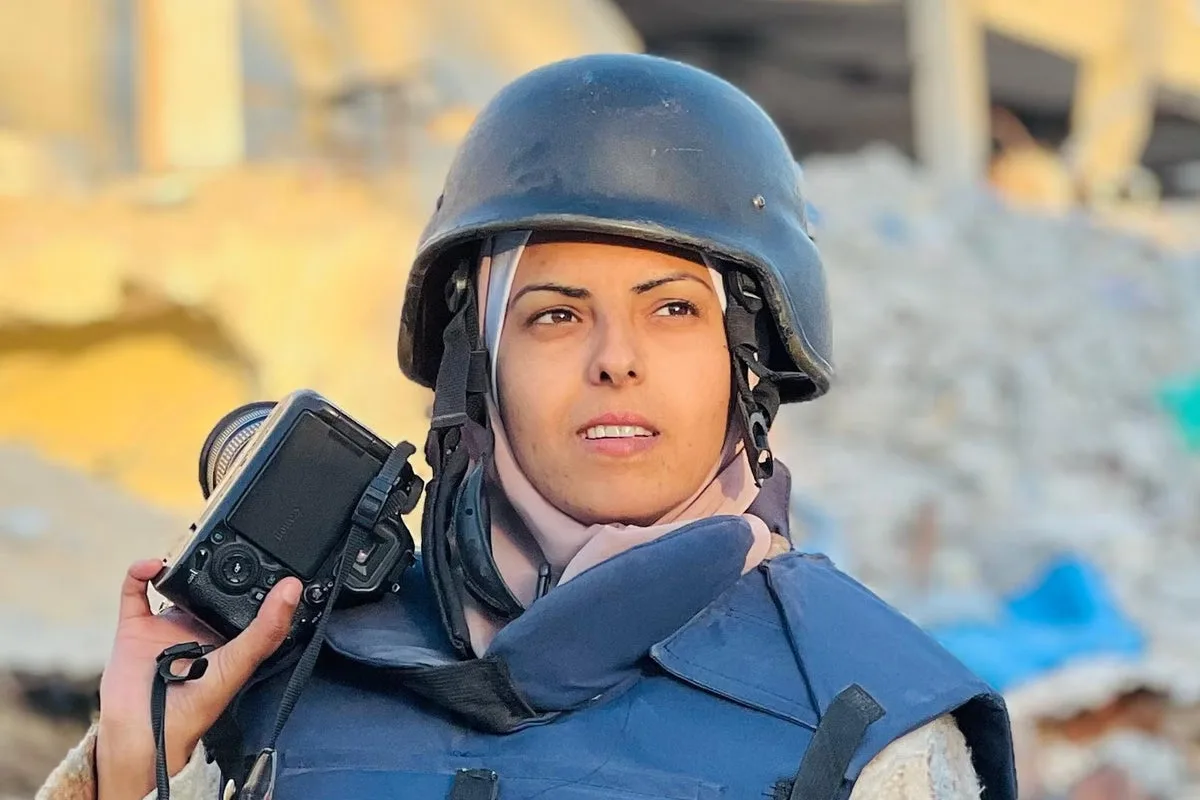
Against the deadly drumbeat of Israeli tank fire, Mariam Abu Dagga is eking out the last of her precious coffee supplies with close friend, flatmate and journalist Baraa Lafi.
The 33-year-old journalist, who works for Independent Arabia and the Associated Press , is sitting in the partially destroyed building she shares with other female reporters in Khan Younis, south Gaza. Israeli military bulldozers had, at some point earlier in this war, punched through the side of the wall, which the owners had patched up with rubble, cement and rocks. And so the room is "crushed and deformed", Baraa says. But it is home - for now.
Together the two women, who bonded over their passion for work, are discussing their latest joint report about overcrowding in Nasser Hospital, located just across the street. They had interviewed their friend, Canadian-Palestinian emergency nurse and international volunteer Amanda, whose surname is coincidentally Nasser.
They are interrupted by Baraa's mother calling to check on them. They reassure her they are both fine.
Truthfully, Mariam hasn't been good for weeks. She deeply misses her only child: 14-year-old Ghaith she had managed to send out of Gaza to the UAE last year. She is still grieving the loss of her mother, who in the middle of the bombing in May 2024 died of cancer, in part due to a lack of treatment. Her father, to whom she had donated one of her kidneys before the war, wasn’t doing well either. The family had, like so many in Gaza, lost their home in Khan Younis, been forcibly displaced multiple times and survived starvation.
Surrounded by death, she had secretly left a will for her son with Baraa. Three days earlier, she had also sent a voice note to Hadi Torfi, her editor at Independent Arabia , warning that she might be forced to flee for the fourth time. The staff at Nasser Hospital had told journalists, following a well-worn pattern of Israel striking, encircling and laying siege to hospitals, that Nasser and the surrounding area would be next.
"I hope you are still tracking me, right?" she says in the voicenote, breaking off into deep, chest-wracking coughs. "I don't know where to go. I have nowhere to go," she trails off.
Inside the hospital, Amanda Nasser, who is volunteering with the Canadian medical charity GLIA, is frustrated that she has to leave her work to get in a convoy. All the international medics at Nasser had been told the night before that they must attend mandatory World Health Organisation (WHO) training about gender-based violence (GBV), off campus.
The stifling wards, thick with the smell of death and decay, are over capacity, and so any medic leaving the hospital seems excessive. "Usually we can get [training] through some sort of lesson we can do remotely online," she recalls.
5News aggregated this summary from the outlet’s public feed. The full article, with all the context, is on www.independent.co.uk — the content belongs to The Independent World.