Samsung and LG vow to remove 'botnet' apps from their smart TV app stores that turned sets into an AI scraping machines — but the shocking claim that over 40% of webOS apps had botnet code raises the question of how things ever got this bad
Malware botnets route traffic through the internet connection on many smart TVs Roku, Fire TV, Tizen and webOS all affected Some manufacturers are removing affected apps LG, Samsung, Roku and Fire TV televisions and devices may have been part of a malicious "botnet" — and millions of TVs could be affected, though LG and Samsung have committed to removing the relevant apps, FlatpanelsHD rounded up pieces of this puzzle, stretching back several months.
Back in April, it emerged that many apps and games included a feature called "residential proxy" that could be abused by bad actors.
One example, IPIDEA, had enlisted millions of smart TVs in a network that could crawl the web for AI training or even carry out coordinated attacks by groups in China, North Korea, Iran and Russia.
The TVs were being used to bypass IP range blocks that affected AI data centers: because each individual TV has its own unique address, such blocks could easily be evaded by seeming to be 'real' traffic.
And because the proxy feature doesn't require the app to be open, TV owners would be none the wiser.
According to security researcher Harrison Sand at Mnemonic, one of the malware-infected apps was a Pac-Man game for kids that Samsung featured as an Editor's Choice.
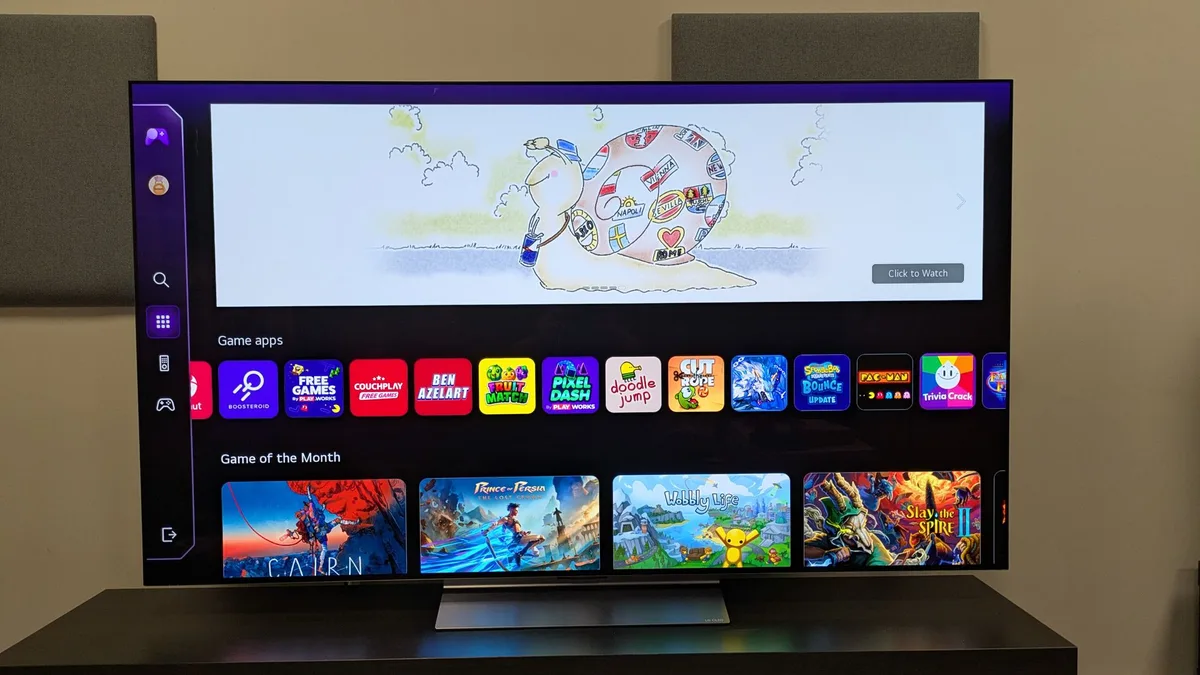
And according to security firm Spur, 26.5% of apps for Samsung Tizen smart TVs and over 42.5% of LG webOS apps could be dragged into the botnet.
That's a truly shocking statistic, LG's webOS appears to be the most affected, with researchers claiming that over 42.5% of webOS apps contained reproxies (Image credit: Future) What is a residential proxy, and why is it bad? A residential proxy or "reproxy" transmits data through your device, in this case your TV, to make it look as if your TV is the sender of that data.
The feature isn't necessarily malicious — it can be used for testing and advertising purposes — but as security expert Spur explains, it also "provides attackers with a scalable way to hide automation, bypass geo-controls, and evade reputation-based defenses." Spur's website goes into more detail of how they operate and how they differ from services such as the best VPNs .
It seems likely that at least some of the potentially dodgy apps weren't made maliciously; developers who use certain software development kits that have residential proxy features may not know those features are there.
LG and Samsung have now vowed to ban any smart TV apps that contain residential proxies.
IPIDEA is already banned by Amazon, Roku and Google TV, and they have also restricted the new Bright Data network.
LG says that it working with developers to remove the functionality from their apps, and that it will suspend any apps that don't remove it.
5News aggregated this summary from the outlet’s public feed. The full article, with all the context, is on www.techradar.com — the content belongs to TechRadar.