‘Rethinking the laptop is a big undertaking’ — why Googlebooks are so much more than overpriced Chromebooks, and why Apple should be worried
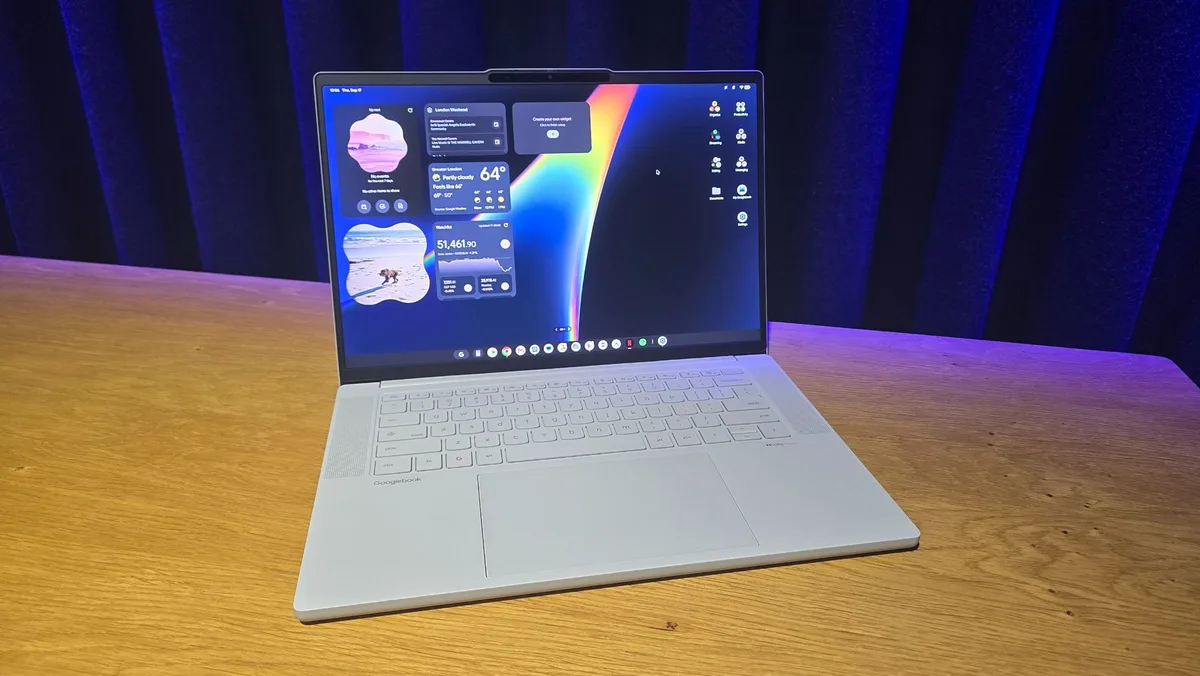
I spent quite a bit of this year wondering about Googlebooks.
After Google announced them in May , things got a little quiet, and I noticed that when I was at the huge Computex 2026 show in Taiwan, no one seemed to be talking about them — Nvidia’s RTX Spark ARM chip , and Windows 11 competitors to the (then recently-released) MacBook Neo , were the talk of Taipei.
Computex would have been the ideal event for Google and its hardware partners to hype up Googlebooks, if only to give us a bit of a tease.
Instead, the silence made me worry that they could end up being another Google product that quickly gets forgotten about.
So, when rumors of an impending Googlebook launch started cropping up a month or so ago, I was very interested.
However, with information still so thin on the ground, no one was really sure what a Googlebook would be.
Would they be budget laptops designed to replace Chromebooks ? Or, might they be mid-rangers aimed at taking on the MacBook Neo? Well, now that we have pricing information, and I’ve spent time with the five Googlebooks that will go on sale on October 5, I can confirm that Googlebooks are neither of those things — instead, they’re premium thin and light laptops designed to rival the MacBook Air , and Windows 11-powered Ultrabooks.
And that makes them all the more interesting. (Image credit: Future) More ambitious than a Chromebook With the cheapest Googlebook, the Acer Googlebook 14, starting at $899 / £999 (around AU$1,899), you might be disappointed that these aren’t going to be ultra-affordable Chromebook replacements, especially at a time when prices of everything, especially tech, seems to be climbing.
However, as multiple Google employees told me when I visited the company's UK headquarters in London, Googlebooks are not replacing Chromebooks.
Instead, Chromebooks will remain the budget, entry-level, laptop choice running Chrome OS, while Chromebook Plus devices will remain the mid-range option.
Googlebooks, meanwhile, will be the high-end, flagship laptops that run an entirely new operating system — Googlebook OS — while still offering plenty of value for money.
The $1,000 / £1,000-plus price has allowed Google and its hardware partners to be rather ambitious with these first-generation Googlebooks.
Each one (the aforementioned Acer Googlebook 14, plus the Lenovo Googlebook 15, HP Googlebook 14, Dell XPS Googlebook, and Asus Googlebook 14) has a stylish thin and light design, and, depending on the model, offers premium features such as OLED touch displays, haptic touchpads, and fingerprint sensors. (Image credit: Future) Each Googlebook also has a ‘Glowbar’, which is an LED stripe located on the back of the lid that can light up in a variety of ways depending on what you’re doing on the Googlebook.
5News aggregated this summary from the outlet’s public feed. The full article, with all the context, is on www.techradar.com — the content belongs to TechRadar.