Portable wind turbines are riding the DIY energy boom — Ventyra R1 smashes Kickstarter goal by 90x, promising 35-minute phone charges
Portable and DIY energy tech is having a moment: more and more of us are installing balcony solar , setting up home batteries , and generally finding alternatives to the regular power grid — and a new appliance being crowdfunded on Kickstarter extends the trend.
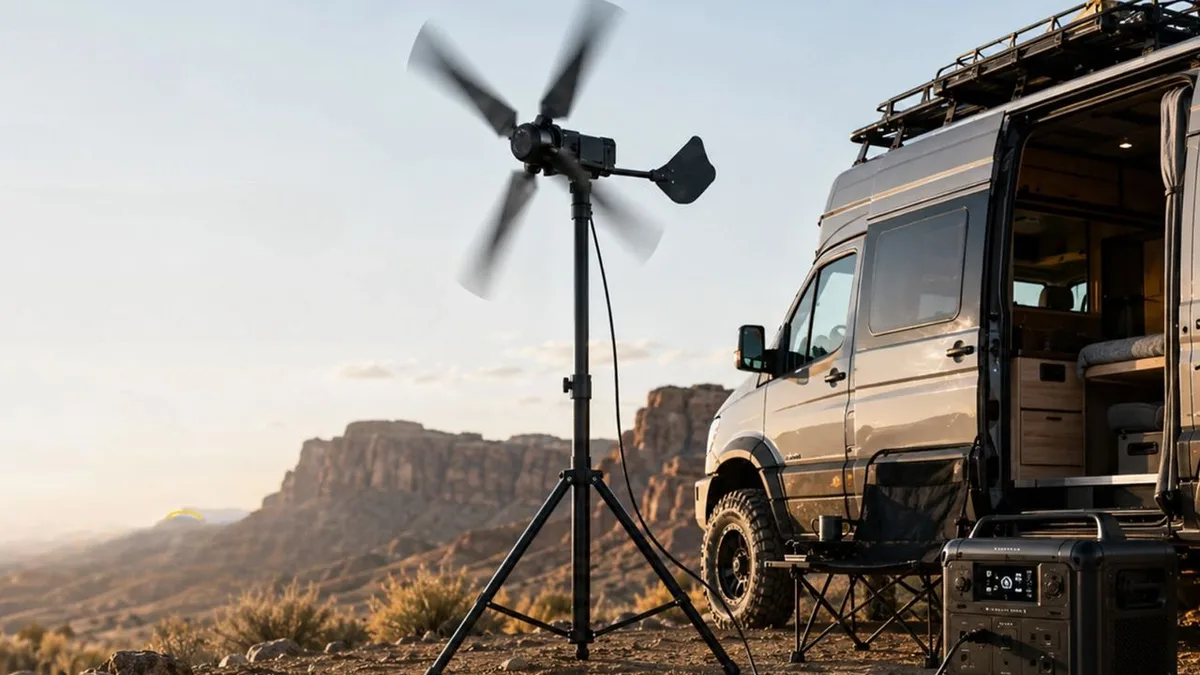
It's the Ventyra R1, a portable wind turbine that's compact enough to fold away and put in a backpack.
Like portable power stations and solar panels, the idea is you can get your gadgets recharged anywhere your travels take you — provided there's a strong breeze.
Given that a lot of outdoor locations are pretty blustery, including coastal roads and hillside trails, it's an intriguing innovation with a lot of potential.
It seems popular too: over 600 people have now backed it on Kickstarter (via New Atlas ).
Meet the Ventyra R1 While this isn't quite the first portable wind turbine we've ever seen, they're a lot rarer than portable solar panels and chargers, and the Ventyra R1 seems to get a lot right — as far as we can tell without testing it.
It's simple to assemble and set up, and gives you a decent amount of power on the go.
The core specs are 50W of power output, 75W peak load, and 12V DC support, so it would take you around 35 minutes to charge a phone if the turbine was running at top speed (based on Ventyra's own testing).
There's an integrated power hub for plugging your gadgets into when they need recharging.
A start-up wind speed of just 6.7 mph (3 meters-per-second) is listed, so it doesn't take much of a breeze to get some power going.
At those speeds you're unlikely to see much in the way of charging though, so it might be an idea to charge up a power bank with the turbine over an extended period, then use that for your other devices.
A day at the beach with the Ventyra R1 (Image credit: Ventyra) The wind turbine pack comes with its own tripod stand and carry bag, and you also get four ground stakes for fixing it in place (just like you would with a tent).
While it's marketed for being suitable for remote adventures, you could also set it up on a balcony at home and use it as an alternative power source there.
There's room for expansion here as well: multiple R1s can be used with the same power hub, expanding the amount of power you can capture at once, and there are also bundles available that include solar panels — these can connect to the same system as well, increasing the capacity of your on-the-go clean energy setup.
5News aggregated this summary from the outlet’s public feed. The full article, with all the context, is on www.techradar.com — the content belongs to TechRadar.