Maltese tycoon found not guilty of involvement in Daphne Caruana Galizia murder
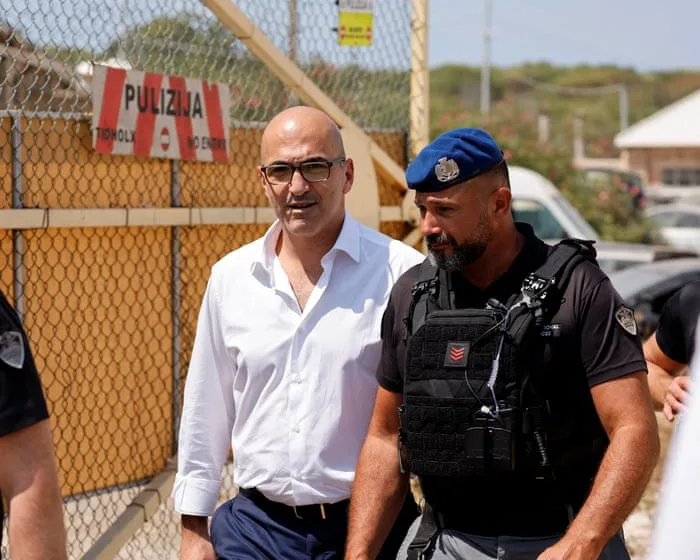
Yorgen Fenech cleared on both charges he faced over 2017 killing of journalist that prompted global outrage
One of Malta’s richest men has been found not guilty of involvement in the murder of the anti-corruption journalist Daphne Caruana Galizia .
The verdict, which is expected to be appealed against by the prosecution, will come as a blow not only to the victim’s family, but to the politicians and campaigners who regard the case as a landmark action in the fight to protect press freedom in Europe .
Nearly nine years after Caruana Galizia’s death, aged 53, in a car bombing in October 2017 , a jury of six women and three men found Yorgen Fenech, 44, not guilty of both counts with which he had been charged: complicity in the voluntary homicide of Caruana Galizia, and association with the intention of committing a crime.
The verdict was decisive. As family members and the media watched, the forewoman announced the verdict to gasps and cheers, saying the jurors had voted to dismiss both counts by an eight to one majority.
Fenech, an influential businessman and property developer whose family owns two Hilton hotels and has a share in a power station in Malta , had been accused by prosecutors of paying €150,000 via a middle man, Melvin Theuma, to have the journalist killed. Prosecutors had asked for him to be sentenced to life in prison.
The murder of Caruana Galizia, who targeted Fenech and leading political figures in her reporting, triggered the most consequential political scandal in Malta’s postwar history, becoming a rallying point for anti-corruption and press freedom activism.
The fallout resulted in Joseph Muscat, the then prime minister of the EU’s smallest member state, being forced out of office along with two of his ministers and his chief of staff.
The two-month trial laid bare the extent of Fenech’s network of political contacts, and raised questions about attempts to sabotage and interfere with the police investigation. Key witnesses, and the defendant himself, claimed the prime minister’s chief of staff had repeatedly leaked sensitive information to Fenech.
Summing up the case against him, the prosecutor Anthony Vella said Fenech believed he could “buy justice”, telling the jury: “You are being asked to decide whether a man who had extensive contacts in politics and among the heads of public entities had enough power to pay for Daphne to be killed.”
The defence argued that the chain of command went higher, with suggestions from Fenech and his lawyers that the person who had ordered the killing was Muscat’s former chief of staff Keith Schembri. They said police had not done enough to investigate allegations about his involvement.
“All roads lead to Keith, and all bridges to Keith were burned,” the defence lawyer Charles Mercieca said in his summing up.
In his testimony, Fenech told the jury: “I never ordered Daphne Caruana Galizia’s murder, or anyone else’s. I had no role in her murder”.
5News aggregated this summary from the outlet’s public feed. The full article, with all the context, is on www.theguardian.com — the content belongs to The Guardian UK.