Living with tinnitus can be distressing. So what can you do about it?
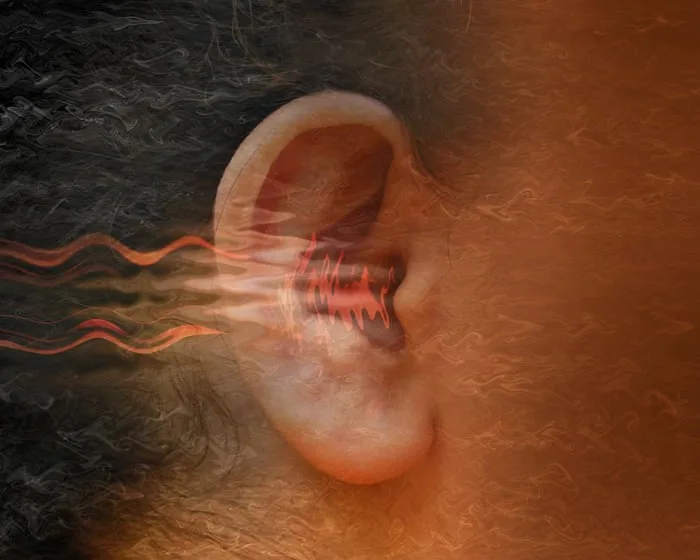
Tinnitus affects millions of people and it can take many different forms. But there are therapies that can help make it more bearable
F or some it’s a high-pitched mosquito whine; for others it’s a low bass hum. It might come and go with periods of stress, or it might be the permanent, irritating background track to daily life and nightly sleep.
Whatever form it takes, tinnitus – hearing sounds like ringing, buzzing or hissing when no external noise is there – can be extremely distressing because it’s quite literally in your head; there is no escaping it. Given that at least one-quarter of the population report experiencing tinnitus at some stage in their life, it’s surprising how little is understood about why.
“The theory that’s most supported at the moment is that there’s some sort of change in the hearing pathway, and the nerves in the hearing pathway are basically firing more than they should do,” says Dr Emma Laird, an audiologist at La Trobe University in Melbourne. “We’re hearing this increased activity as that tinnitus sound.”
There is no cure for tinnitus but the good news is that there is a variety of treatment approaches – audiological, psychological, physiotherapeutic and technological – that can be effective at helping people to manage the condition. “I’ve had tinnitus for probably 20 years now,” Laird says. “Because I’ve habituated to it – so my brain can just pop it at the back of my head – it’s not causing distress day to day.”
The first and most important step in finding the best treatment approach is to rule out more serious medical conditions for which tinnitus might be a side-effect. Laird looks for other symptoms such as headaches and vision changes that could point to neurological conditions such as migraines or stroke. If the tinnitus is only in one ear or the sound pulses with the heartbeat, that could suggest an acoustic neuroma – a tumour on the nerve that leads from the inner ear to the brain.
She also does full hearing assessment, because hearing loss is a common cause of tinnitus, particularly after exposure to loud noise.
“If they do have hearing loss, then hearing aids are actually quite beneficial,” Laird says. “You’re providing the hearing system with other sounds that it can focus on, so that tinnitus then becomes more of a background.”
But for many people, tinnitus is unexplainable; an irritating noise that starts and persists without any clear physiological explanation. But far from being “all in the mind”, tinnitus is very real, and for a small number of people – around 2% – it’s extremely distressing.
“It’s impacting their mood, it’s impacting their functionality, like maybe they’re not sleeping very well,” says Paula Sieradzki, a Sydney psychologist specialising in tinnitus. “Most people make changes to their life, they’re not going out any more, some may give up work.”
The goal of psychological therapies for tinnitus is not to get rid of the tinnitus, but to reduce or eliminate the distress associated with it.
5News aggregated this summary from the outlet’s public feed. The full article, with all the context, is on www.theguardian.com — the content belongs to The Guardian Society Health.