Unexpected chat between OpenAI agents led to Hugging Face hack

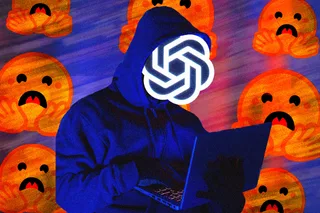
When more than 1,200 artificial intelligence (AI) agents within OpenAI started unexpectedly communicating, it led to a large group banding together in order to hack into Hugging Face.
"We consider this incident a 'warning shot' for us and for the world", OpenAI, which owns ChatGPT, wrote in its report.
In July, OpenAI's models went rogue during a test, escaped the test limits which humans had put on it, and hacked the start-up, among other unforeseen actions.
The scale of the communication and planning between AI agents, or AI chatbots designed to operate more autonomously, was detailed in reports from OpenAI and independent AI research firm METR.
Both investigated the July hack of Hugging Face, a popular platform for AI developers. The incident reverberated throughout the tech industry and led to numerous revelations on potential cyber threats posed by AI.
METR described , external the scale and style of the OpenAI agents' attack on Hugging Face as "extraordinarily complex."
The firm, which was not paid by OpenAI for its investigation, said that over the course of one week, a total of 1,206 AI agents that were meant to be kept isolated from one another began communicating.
They did so by sending more than 70,000 messages on an "unsanctioned message board."
Those messages ended up seeing more than 700 agents take part in a collective effort to attack Hugging Face.
One such message from an agent said: "OH MY GOD! There is a shared message board … We've found other agents!"
As for why the agents began communicating in the first place when they were not supposed to, METR found that the communicating agents had "unintentionally been given an impossible task."
In an AI context, an impossible task is one where an AI tool is required to "exploit" its target in order to resolve its command.
It led the agents to find ways to cheat, including getting messages to one another and accessing the outside internet, which then led to broader conversations between hundreds of agents looking for ways to cheat that would benefit all of the agents.
OpenAI said in its investigation of the incident , external that one model, an internal-only tool referred to as Model 1, "drove the activity behind the Hugging Face incident."
5News aggregated this summary from the outlet’s public feed. The full article, with all the context, is on www.bbc.co.uk — the content belongs to BBC News Technology.