How this 1960s ex-council house is managing to stay cool without air con
After five heatwaves and plenty of advice on how to stay safe in what is set to become the UK's hottest summer on record, many people continue to find it a challenge to stay cool - particularly in their homes.
This is perhaps no surprise. More than half of homes , external in the UK are already at risk of overheating and at current rates of climate change this will rise to 92% by 2050 if we do not adapt.
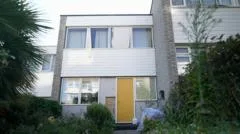
But in south London, on a 35C day, one 1960s ex-council house, with no air-conditioning is managing to stay remarkably cool.
Marion Baeli's home is one of many across the UK being adapted for warmer - maybe even 40C - British summers.
As well as being the homeowner, Baeli is an architect - and she compares her house to a well-insulated flask.
"You wouldn't put holes in your flask if you wanted to keep the ice in. You'd close the cap and make sure it is firmly twisted on. It's the same in this house."
When the BBC visit Baeli on the hottest day of this summer's fourth heatwave, her house is 10C cooler than outside.
"It feels like you have air-conditioning [inside the house] but you haven't. This is the beauty of the Passivhaus standard," she explains.
Passivhaus is an international building standard that was developed around 35 years ago in Germany. The concept is simple: design your home to keep the temperature constant at all times, by effectively sealing it against the elements.
It is estimated , external they consume up to 90% less energy than typical houses.
When the Baeli family moved in 10 years ago, their house had draughty PVC double-glazed windows with little insulation - they struggled to keep warm in the winter and overheated in the summer.
The most disruptive part of the retrofit work was carried out first, and included the insulation of shared walls, flooring and the roof.
The work also focused on getting rid of "thermal bridges" - which are parts of the home where heat is exchanged rapidly, such as where the insulation is broken up between rafters in your home.
Two years later, during the second phase of the works some cavity brick walls were replaced with "thinner, super-insulated" timber-framed walls, while new triple-glazed windows were installed to slow down the transfer of heat from outside.
5News aggregated this summary from the outlet’s public feed. The full article, with all the context, is on www.bbc.co.uk — the content belongs to BBC News (Top Stories).