Extended reality takes visitors from the ruins of West Bank to 17th-century Amsterdam at Venice Immersive

From frivolous to serious, virtual nosy passersby to the impact of climate change, the groundbreaking festival draws to a close – but this year the exhibits live on
T he first installation one encounters on visiting Venice Immersive, the film festival’s reliably head-spinning showcase for new media, is a chest-high metal box fitted with an eyepiece and two speakers. On peering inside you see a view of yourself from about 20ft above. You see the other guests walking past, a couple of pigeons on the ground. When one of these passersby lingers at your side for just a moment too long, the obvious impulse is to glance up from the eyepiece in order to see what they want. It is at this point that the experience blooms into a Lynchian nightmare.
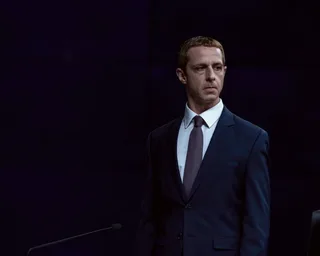
The passerby is not real – or rather, he’s only real in the box. He wears a blue suit and speaks with a heavy French accent and tells a tale that would sit badly in polite company. He says that I must have too much time on my hands, to stand hunched over this eyepiece for several minutes on end. “Why do people keep looking inside this box?” he demands. “What is it that they hope to see? It is not reality.”
The name of Celine Daemen’s fabulous installation – Nothing to See Here – is immediately belied by the presence of 67 further exhibits (the organisers refer to them as “experiences”) arranged cheek by jowl on a small dedicated island. But the creepy Frenchman’s contention should not be so lightly brushed aside. Venice Immersive’s projects run the gamut from the frivolous to the serious, the escapist to the harrowing. But is the island a backwater or a new-found land? Does it represent reality or different versions of a dream?
Incredibly, Venice’s vision of an immersive, interactive new media future is now 10 years old. In that time it has bloomed from a small sideshow inside the big Mussolini-era casino to a thriving 10-day event out on the lagoon. Attendance figures have shown a year-on-year increase and this is borne out by the external, more visible markers of success. There used to be one boat ferrying punters to the island. This year there are two, crisscrossing and sometimes berthing side by side so that passengers are forced to access one boat via the deck of the other. The bank by the lagoon was once a blighted strip of parched grass. It’s now home to a thriving shantytown of street food vans and stalls. The merchants of Venice, as ever, tend to follow the money.
If Venice Immersive’s story thus far has been one of exponential growth – in visitor numbers, in tech, in the sophistication of the stories being told – there must come a point when growth is arrested or slips back – and maybe this, too, counts as a measure of underlying good health. I’ve gushed at some length about this event in the past. Each successive selection has felt like a giant leap forward. But just as the headline film festival can only be as good as the quality of work it receives, that’s bound to apply to Venice Immersive as well. The programme is strong; much of the work is astounding.
5News aggregated this summary from the outlet’s public feed. The full article, with all the context, is on www.theguardian.com — the content belongs to The Guardian Technology.