London’s low emission zone is working – so why are cities around the world so cautious about clean air?
Similar initiatives have been launched from Barcelona to Bogotá, but they have misinformation, political pressure and vested interests stacked against them
T en years ago, Alastair Harper was an advocate for young people’s health sitting in a stuffy meeting room in London planning an air pollution campaign. “My phone started buzzing,” he said. “I took the call, and then told the room I needed to leave immediately.
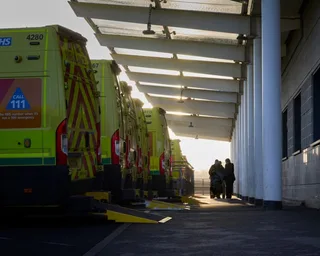
“I had to get to UCLH [one of London’s major hospitals]. My own child was headed there in a blue-lit ambulance because she was struggling to breathe London’s toxic air.”
Hundreds of thousands of parents across the UK capital had similar experiences in those years. Between about 6,000 and 8,000 people were dying prematurely each year in London in the late 2010s. In 2020, an inquest found that the death of Ella Adoo-Kissi-Debrah in 2013 had been a direct result of air pollution, the first time it had been listed as a cause of death in the UK .
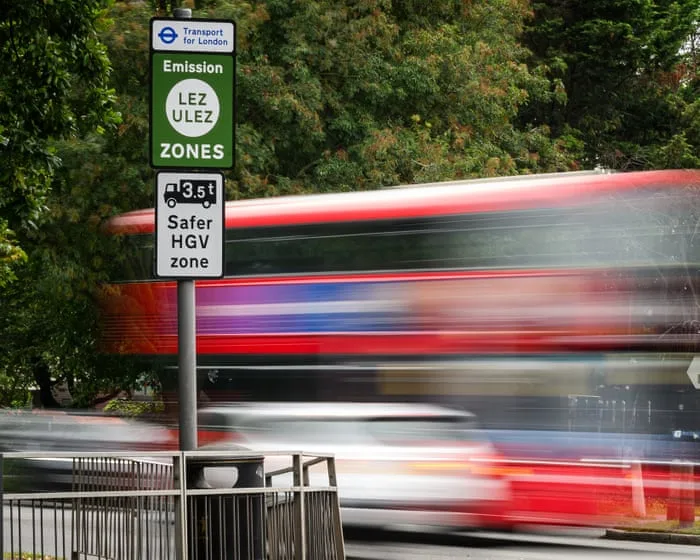
This week, a study from Queen Mary University London (QMUL) showed a significant reversal. Children’s lungs had grown bigger and stronger since the most polluting vehicles have been restricted on the capital’s roads, scientists found. The ultra-low emission zone (Ulez) – introduced by London’s mayor Sadiq Khan in 2019 and expanded in 2021 and 2023 – charges £12.50 a day for more polluting vehicles that do not meet stringent standards. It has drastically cut levels of nitrogen dioxide, a harmful pollutant.
To Harper, who later worked for Khan as an environmental adviser, and now works independently, relief at his own child’s recovery has been supplemented by the satisfaction of knowing that far fewer parents will experience such dread. “To know now that same air is so much safer for the kids that breathe it because of the political choice of one man makes me feel proud of this city,” he said.
Nick Hopkinson, a professor of respiratory medicine at Imperial College London, said the QMUL study was not a surprise. “There is an absolute wealth of evidence that air pollution is a major cause of ill health and premature death across the planet,” he said. Air pollution kills 7 million people a year globally, according to the World Health Organization.
Poor air not only causes respiratory difficulties and the stunting of children’s lungs, but also heart disease and stroke. It is associated with some forms of cancer, dementia, autism and cognitive difficulties in children too. New studies are adding to our knowledge, but we have known for decades of the basic dangers of dirty air. So why is there so much opposition to curbs on air pollution, which are clearly sound public health measures?
This opposition, culture war even, is central for all cities hoping to follow Khan’s lead.
5News aggregated this summary from the outlet’s public feed. The full article, with all the context, is on www.theguardian.com — the content belongs to The Guardian Society Health.