Argonne scientists create chatty X-ray microscope that zooms in where you tell it to
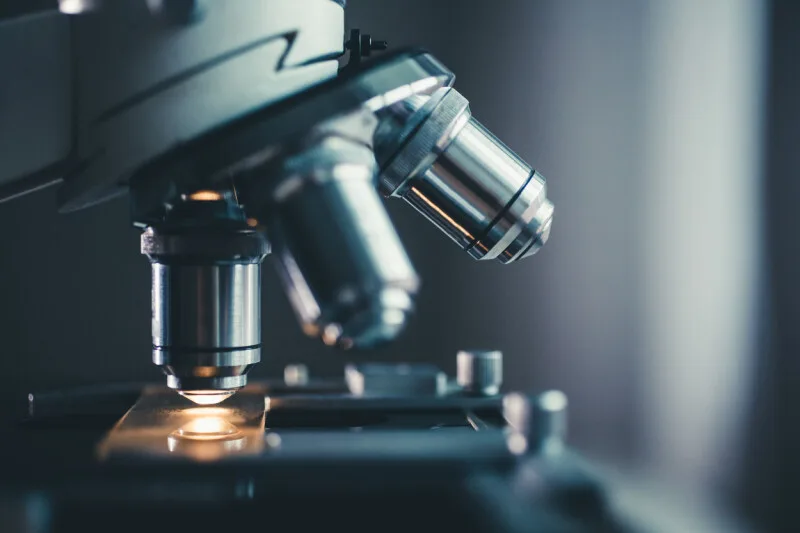
Researchers at Argonne National Laboratory have plugged an agentic AI platform into an X-ray nanoprobe beamline, creating a system that can get a closer look at areas researchers ask it to focus on.
Argonne reported the success of an experimental run of the agentic microscope this week, with the device initially tested on its ability to locate the interface between two regions on an integrated circuit device, and all by just telling the microscope what they wanted it to determine using natural language.
“Microelectronics was simply the example used to showcase the technology,” Argonne computational scientist Mathew Cherukara said of the project.
“The real achievement is developing a next‑generation, AI‑enhanced microscope that can benefit many scientific fields.” The microscope itself is part of Argonne’s 26-ID hard X-ray nanoprobe beamline, which uses a tightly focused X-ray beam to perform nanoscale imaging and measurements of target samples.
Such devices are considered a prime use case for scientific applications of AI because they produce a massive amount of data that can take human researchers considerable time to comb through thanks to their use of a technique known as ptychography.
The method collects multiple diffraction patterns as X-rays interact with a sample, with modern X-ray experiments capable of generating millions of images in just a few hours of beam time.
Conventional ptychographic reconstruction and analysis can take hours or days, whereas Argonne says its AI system can reconstruct images in real time as the data arrives.
Argonne’s X-ray nanoprobe beamline is the sort of scientific facility the Trump administration is looking to boost with AI through its Genesis Mission.
Launched by President Trump in November 2025 and led by the Department of Energy, Genesis aims to find ways to use AI in scientific research, including the Synergistic Neutron and Photon Science - Intelligence (SYNAPS-I) project that Argonne is undertaking in partnership with Lawrence Berkeley National Laboratory, which is leading the effort.
Brookhaven National Laboratory, SLAC National Accelerator Laboratory, and Oak Ridge National Laboratory are also participating in the project.
The inclusion of agentic AI in the Argonne X-ray microscope is actually the second phase of the project; the first was simply to see if, as mentioned above, AI could be used to reduce ptychographic image processing time.
That was a success, as the lab reported in April, and phase two’s addition of natural language agentic AI appears to have been a win as well.
5News aggregated this summary from the outlet’s public feed. The full article, with all the context, is on www.theregister.com — the content belongs to The Register.