I was being treated for dehydration - when suddenly I couldn't move
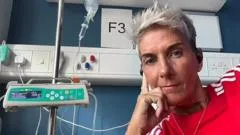
Carmel McConnellogue was in hospital, being treated by medical staff for dehydration, when she suddenly felt she could no longer move her body.
She said she could not speak or feel her face and "everything was numb".
Initial symptoms suggested McConnellogue might have had a stroke - but an MRI scan confirmed that she had Functional Neurological Disorder (FND), meaning there was was a problem with how her brain received and sent information to the rest of her body.
She said she never expected to be diagnosed with a condition she had never heard of.
"I could not believe it," she told BBC Radio Foyle's North West Today programme.
"It was explained to me by a doctor that your brain is perfect but it's like a computer and it has too many tabs open.
McConnellogue, who was being treated at Altnagelvin Hospital in County Londonderry, was told that the condition was brought on by stress and trauma.
"I felt paralysed, trapped and I couldn't stop thinking – I can't move, what is going to happen to me?"
It limits the brain and nervous system's ability to send and receive signals. , external
Its underlying cause is not known, but some experts think it could be linked to stress, trauma or a response to a virus or other inflammatory condition.
Symptoms can vary from person to person, but can include limb weakness, paralysis, seizures, walking difficulties, spasms, sensory issues and cognitive problems.
Some people may experience short-lived symptoms, while other can have them for many years.
Most treatment options come in the form of rehabilitation therapy, according to NHS Inform.
This can include physiotherapy, occupational therapy, speech and language therapy, and psychological therapy.
5News aggregated this summary from the outlet’s public feed. The full article, with all the context, is on www.bbc.co.uk — the content belongs to BBC News UK.